CAPTIVATING CATANIA
Experience a Unique Style of Sicilian Charm

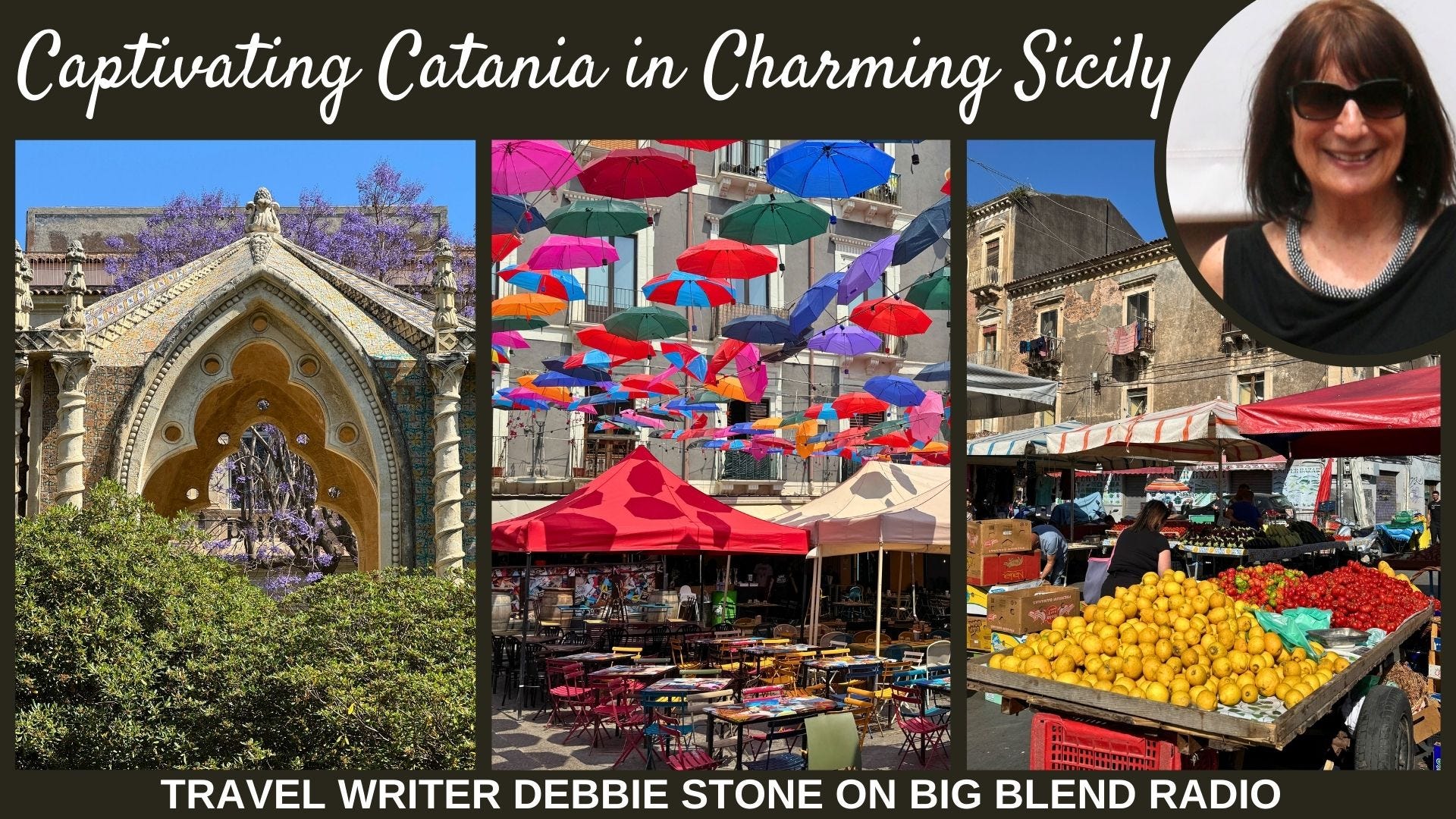
Travel writer Debbie Stone explores the enigmatic charm of Catania, where Mount Etna, ancient legends, and Sicilian cuisine shape the city’s soul. Enjoy the Big Blend Radio podcast, along with her article and photos below. Note, you can also read the article and hear the podcast from the Big Blend Radio “Global Adventures” Magazine.
Catania Captivates With Its Own Style of Sicilian Charm
By Debbie Stone
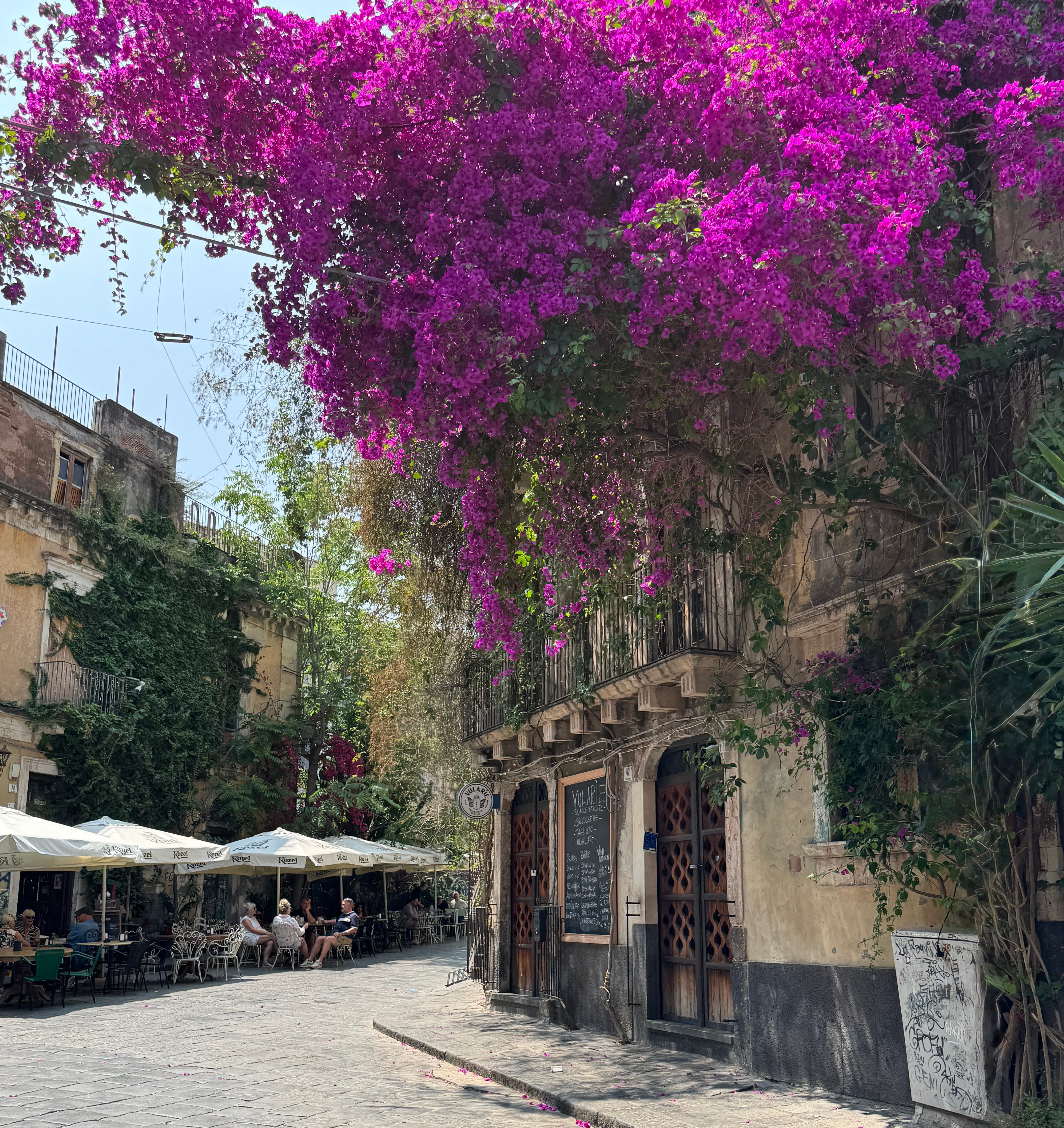
My first introduction to Sicily was the city of Catania. Initially, I was taken aback by the copious amounts of graffiti that covered the walls of buildings everywhere I looked. Combined with the trash on the streets and a prevalent sense of chaos, the town did not make a great first impression.
But as I began to explore this place, I started to see how Catania pulls off its gritty façade and manic energy with authentic aplomb. It’s all a part of the city’s unique brand of Sicilian charm. As one guide said to me, “Here we take the gritty with the pretty!”
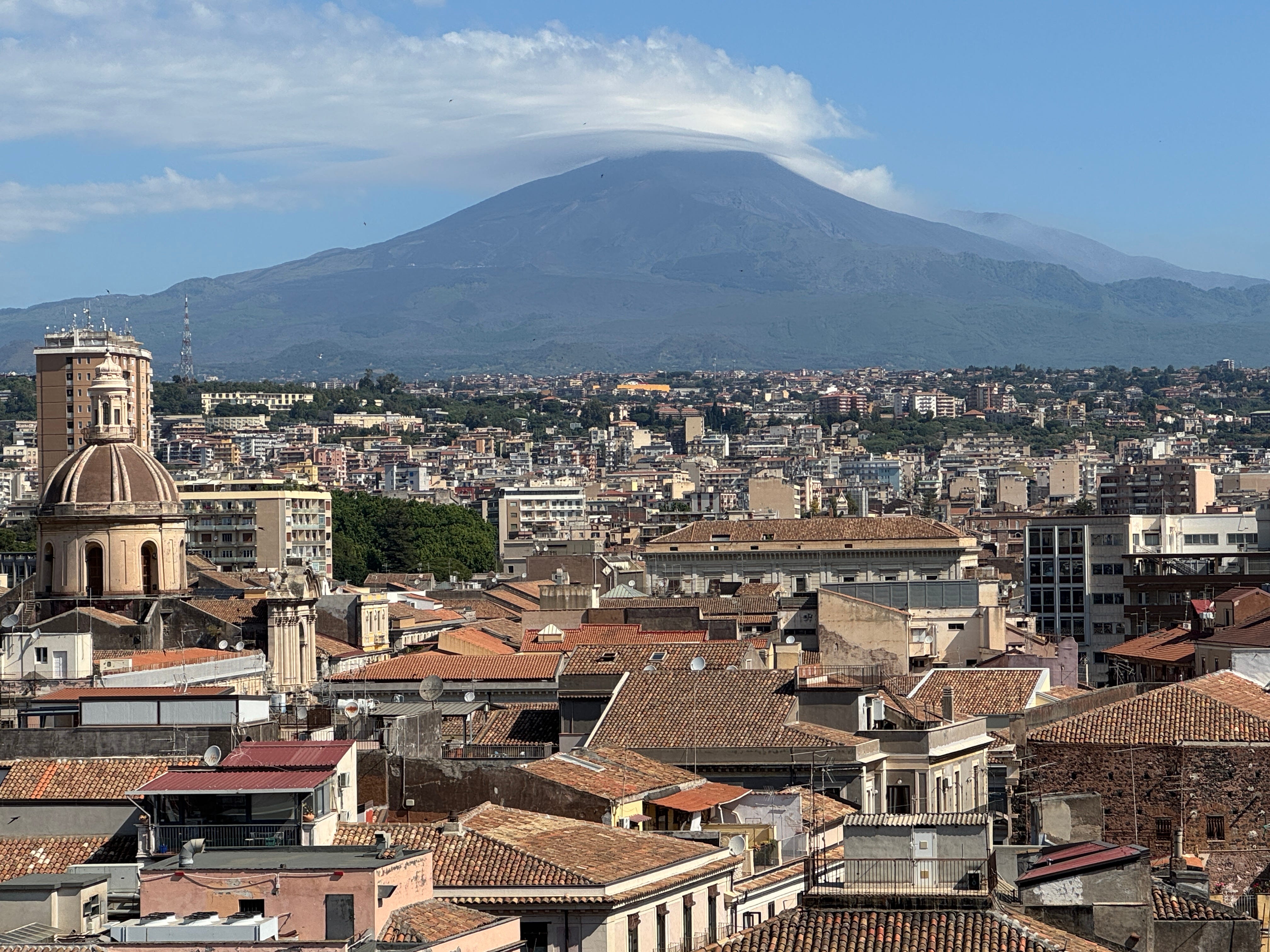
Catania is located on the eastern coast of Sicily at the foot of Mt. Etna and is the second largest city on the island. It boasts a long and colorful history, impressive Baroque architecture, exceptional food and wine, and an underground world of hidden gems to discover.
To understand Catania, it’s essential to recognize that its history is deeply intertwined with that of Mt. Etna, one of the world’s most active volcanoes. This city has been buried by Etna’s magma multiple times. Over the centuries, eruptions and earthquakes have transformed the original Catania, causing it to disappear, buried beneath boulders and new foundations.
You might hear people describing Catania as “the black city” because of the color of its buildings, which were blackened by the soot and ashes of the volcano. Though many structures were damaged or destroyed, this place has always been able to rise from the ashes each time.
There are many attractions In Catania, and I recommend taking a walking tour for a good introduction to the highlights. Most tours begin in the Piazza del Duomo, the central square where Catania’s history and architecture come together.
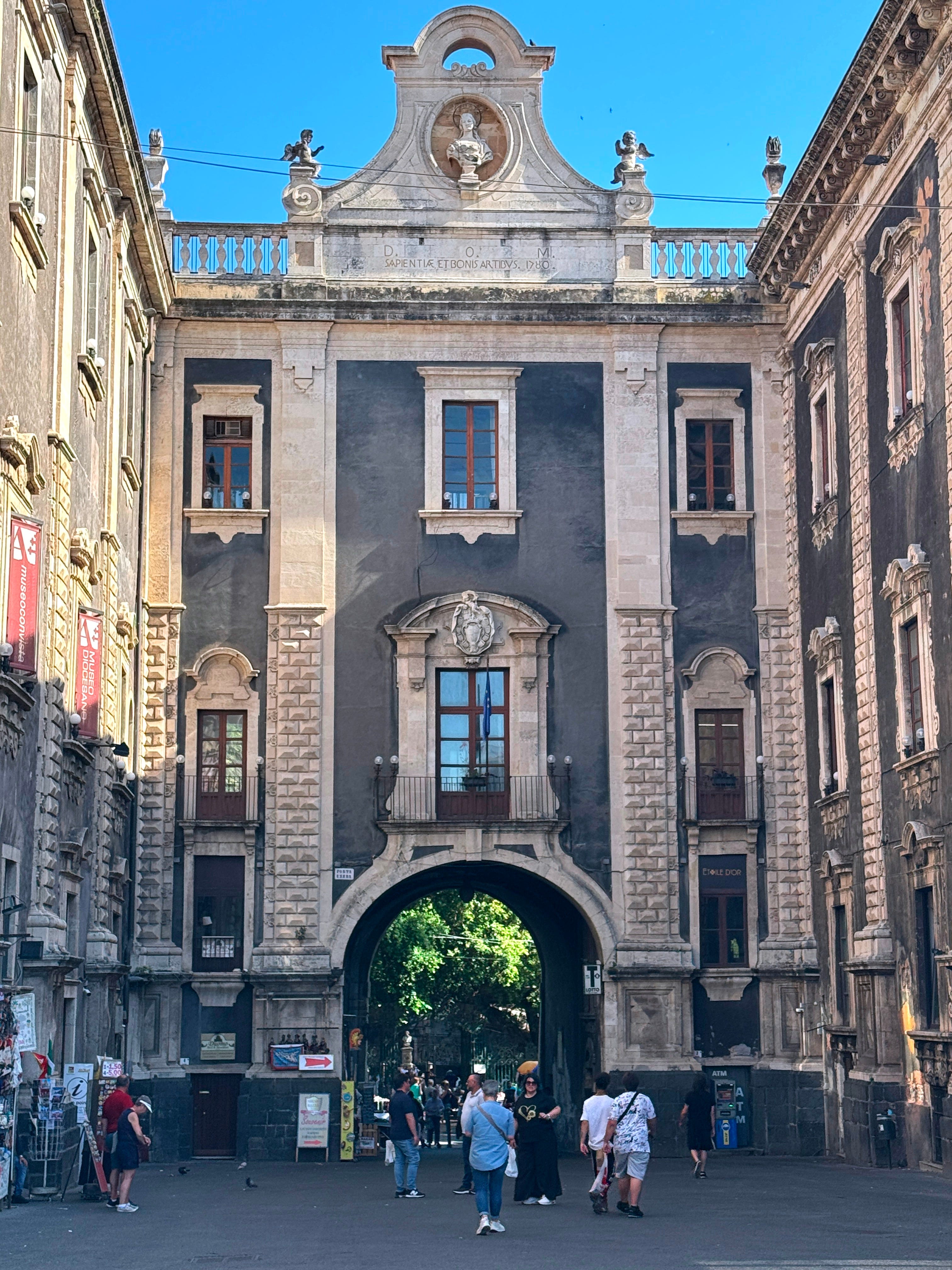
A grand entrance to this plaza is via the Uzeda Gate, also known as the Great Marine Gate. It’s part of the city walls and was installed in 1696 after the 1693 earthquake that shook Sicily to its core.
The Cathedral of St. Agatha takes centerstage in the plaza. It’s an impressive baroque masterpiece dedicated to the martyr St. Agatha, the city’s patron saint. At the age of fifteen, Agatha took a vow of virginity. A Roman lord fell in love with her, and when Agatha rejected his lecherous advances, he accused her of being a Christian. She was subsequently tried, tortured, and died. Her remains are housed inside the cathedral.
Your guide will probably tell you that most locals are obsessed with St. Agatha and many neighborhoods are named after her, as well as churches and historical attractions. And if you happen to visit Catania in early February, you’ll be able to witness the Festival of St. Agatha. It’s the third most popular religious festival in the world in terms of participation of the faithful, with up to a million attendees.
During this “theater of devotion,” large carved floats are toted around the city center, and people dress in white clothing and carry heavy candles in a procession. The saint’s bodily reliquaries are brought out from the cathedral and are carried around on a carved coffin full of jewels.
From the outside, the cathedral looks like a ginormous frosted cake with statues, columns, a massive wood door with carvings, balustrades, and adornments galore. The original church was built between 1086 and 1094, but the current building dates to the mid-1700s. It was constructed over Roman ruins after earthquakes and lava flow dealt their destructive blows.
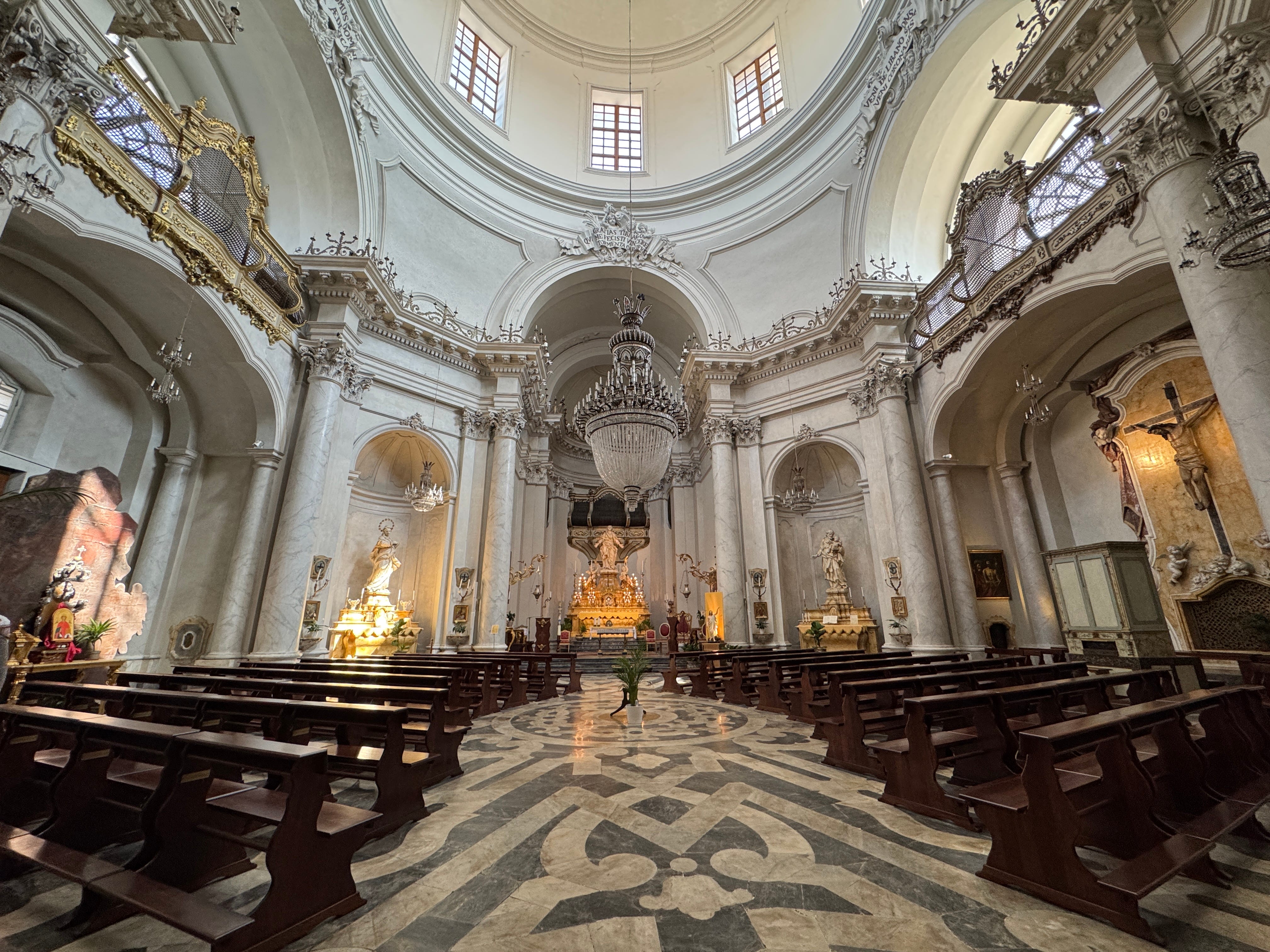
Inside, the space soars skyward, and there are numerous beautiful elements and artwork, as well as a massive pipe organ.
Next door is the Abbey of St. Agatha, a jewel box of frescoes and paintings. Make sure you get a ticket to go up to the dome. Your efforts will be rewarded with a breathtaking panorama of the Ionian Sea, Mt. Etna, and the city.
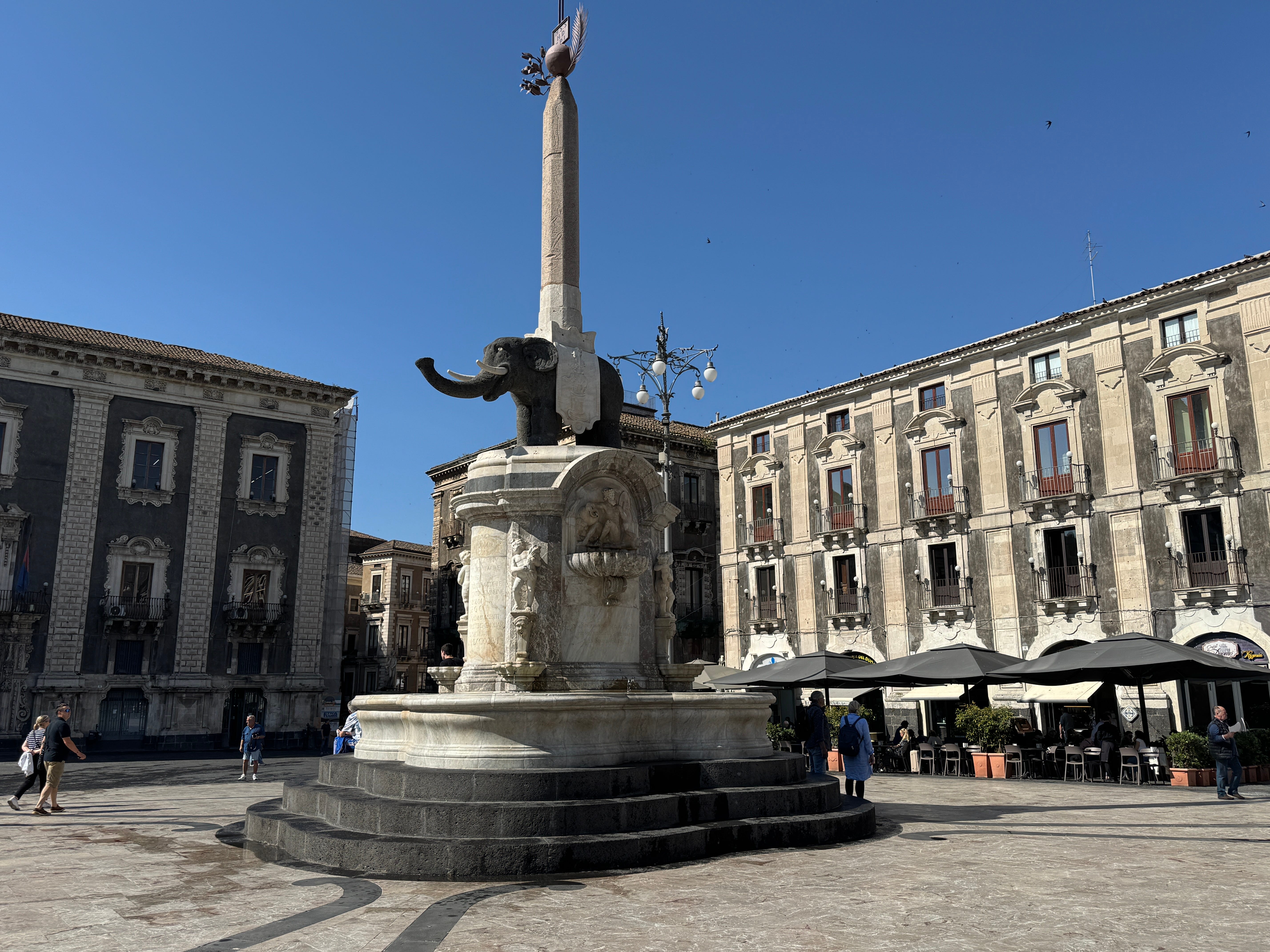
Back on the piazza, you’ll learn about the Elephant Fountain, a grinning black lava elephant balancing an Egyptian obelisk on its back. This quirky statue has been the beloved symbol of Catania since the 1700s and serves as a prominent meeting point and social hangout for locals and tourists.
The elephant was carved from volcanic stone during Roman times. The legend tells of a dwarf elephant who lived in Sicily and protected the people from Mt. Etna’s eruptions. They believed the creature had magical power and could predict the eruptions.
Nearby is another fountain, the Fountain Amenano, an elegant marble creation. It represents the personification of the Amenano River with a young man holding a cornucopia from which water spills out and vanishes into a hidden canal below the square. This is one of the rare spots where you can get a glimpse of this underground river as it resurfaces. At one time, the river flowed freely through the city before the destructive volcanic eruption in 1669 buried it.
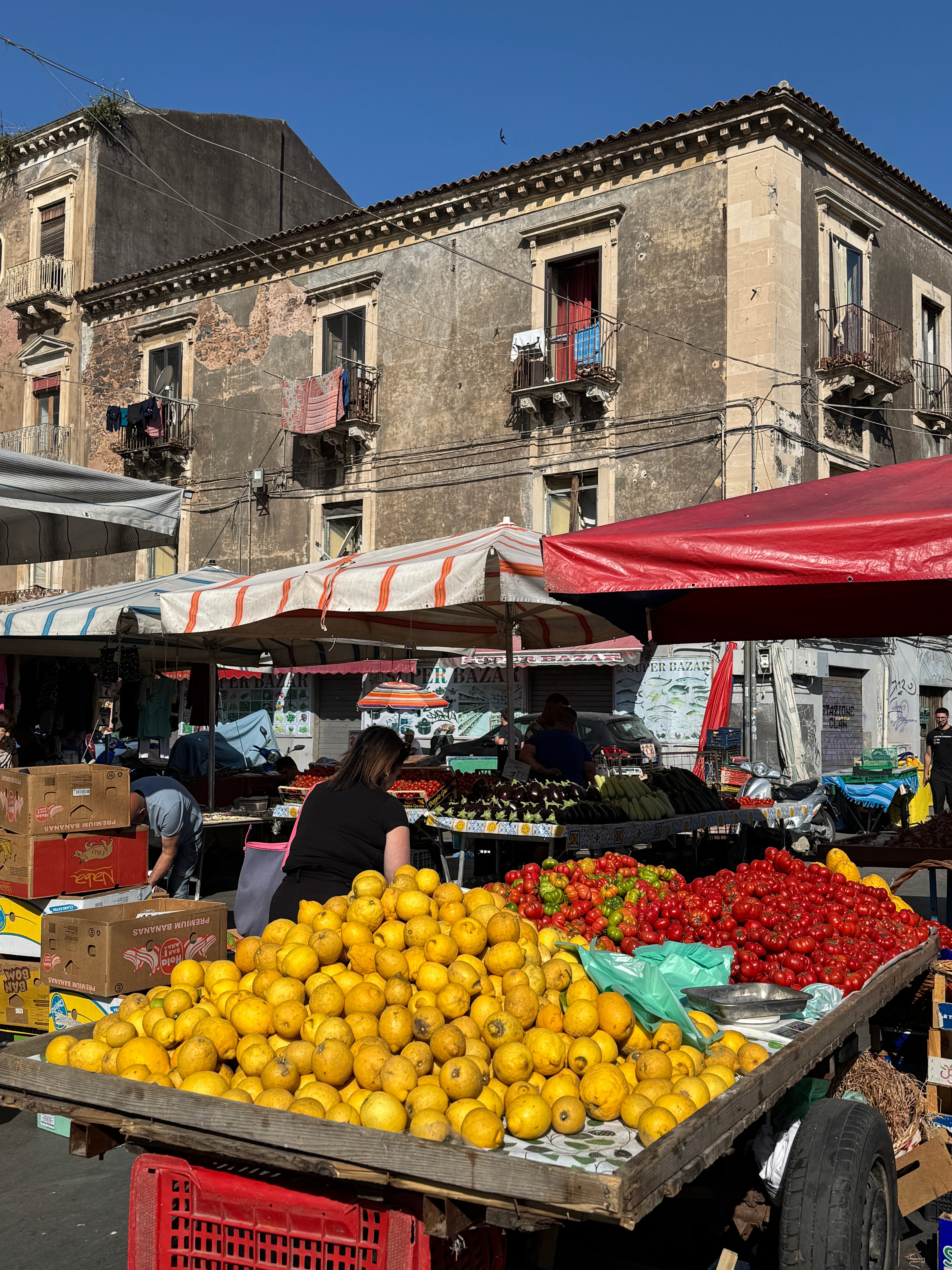
Steps from the fountain is the Catania Fish Market, one of the city’s notable landmarks. Every morning, from under big colorful umbrellas and tents or within marble stalls, vendors sell fresh fish and all sorts of mysterious sea life, meat, and produce, a tradition that has continued since ancient times. It’s a colorful and sensory scene with plenty of smells and aromas, along with the shouts and banter from the fishmongers. Don’t mind the bloody walkways or the fish heads staring at you. This is a visceral experience at its best, and great for people watching and taking pics.
This is also the place to immerse yourself in Sicilian street food, as it’s deeply rooted in the culture here. Try the yummy, assorted crispy fried fish served in a paper cone. Or the arancini, perhaps the most iconic street food. These are best described as balls of creamy risotto, deep fried in breadcrumbs and filled with everything from spinach and mozzarella to prosciutto and even pistachio cream. If you can dream it, you’ll probably be able to find it.
Pasta alla Norma, though technically not street food, has to be my favorite dish. It’s typically made with small tubular pasta like penne or rigatoni and sauteed eggplant, which is then tossed with tomato sauce and topped with ricotta salata. Yum!
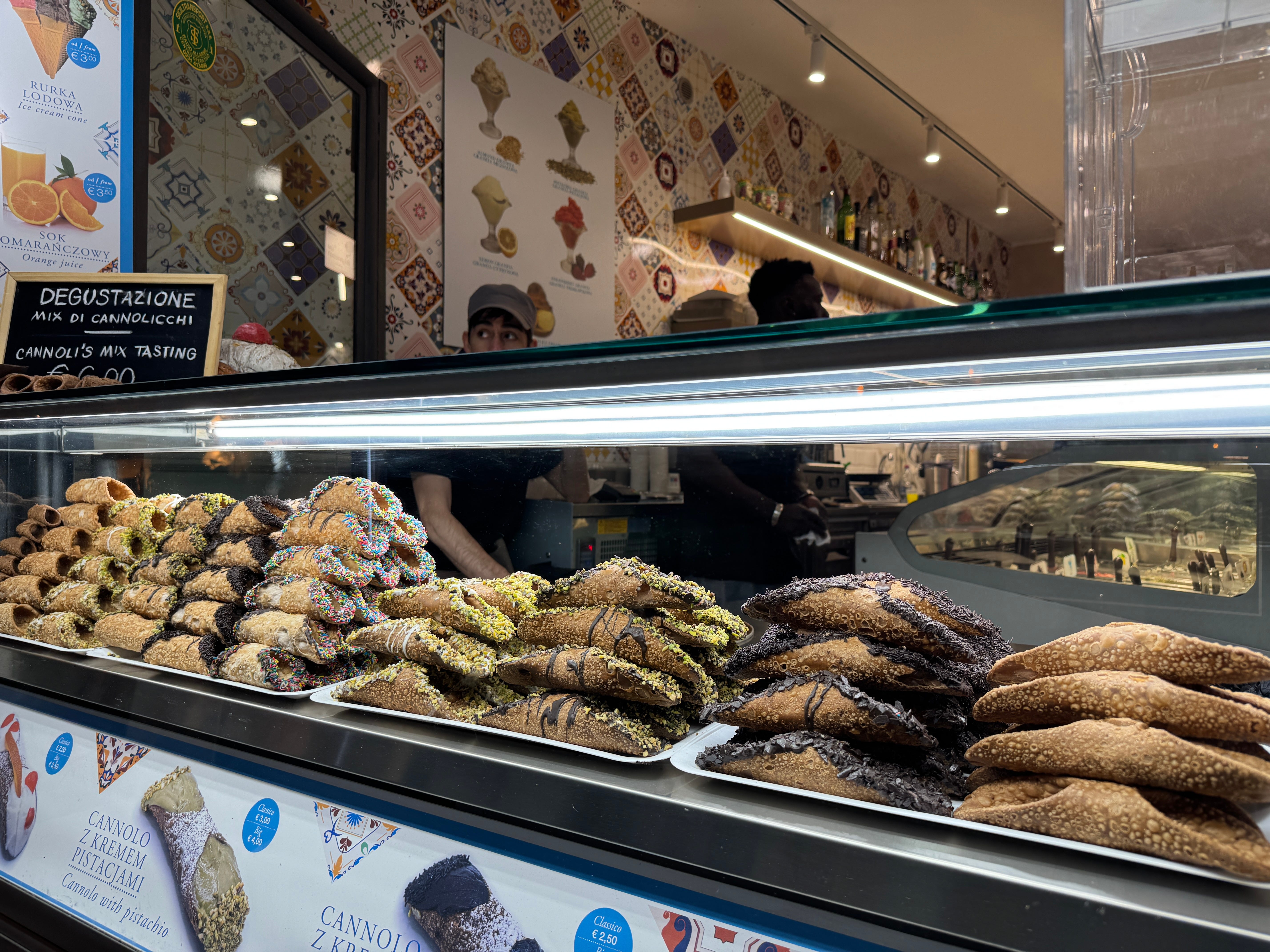
For a sweet treat, I recommend cannoli, which are crispy, tube-shaped shells made of fried pastry dough and filled with ricotta cheese. But you can customize your cannolo with anything you desire, like caramel, chocolate, peanut butter, pistachio, and Limoncello.
I also enjoy granita, especially in summer, as it’s very refreshing. Think of sorbet, but with a thicker texture. It’s basically a combo of sugar, water, and various flavorings in a semi-frozen state.
Also for those hot summer days is selz. Traditionally, this drink is comprised of freshly squeezed lemon juice, seltzer water, and a pinch of Sicilian sea salt. The salt gives it a bit of a zing and also adds essential minerals to the beverage. People have been drinking this beverage since ancient times.
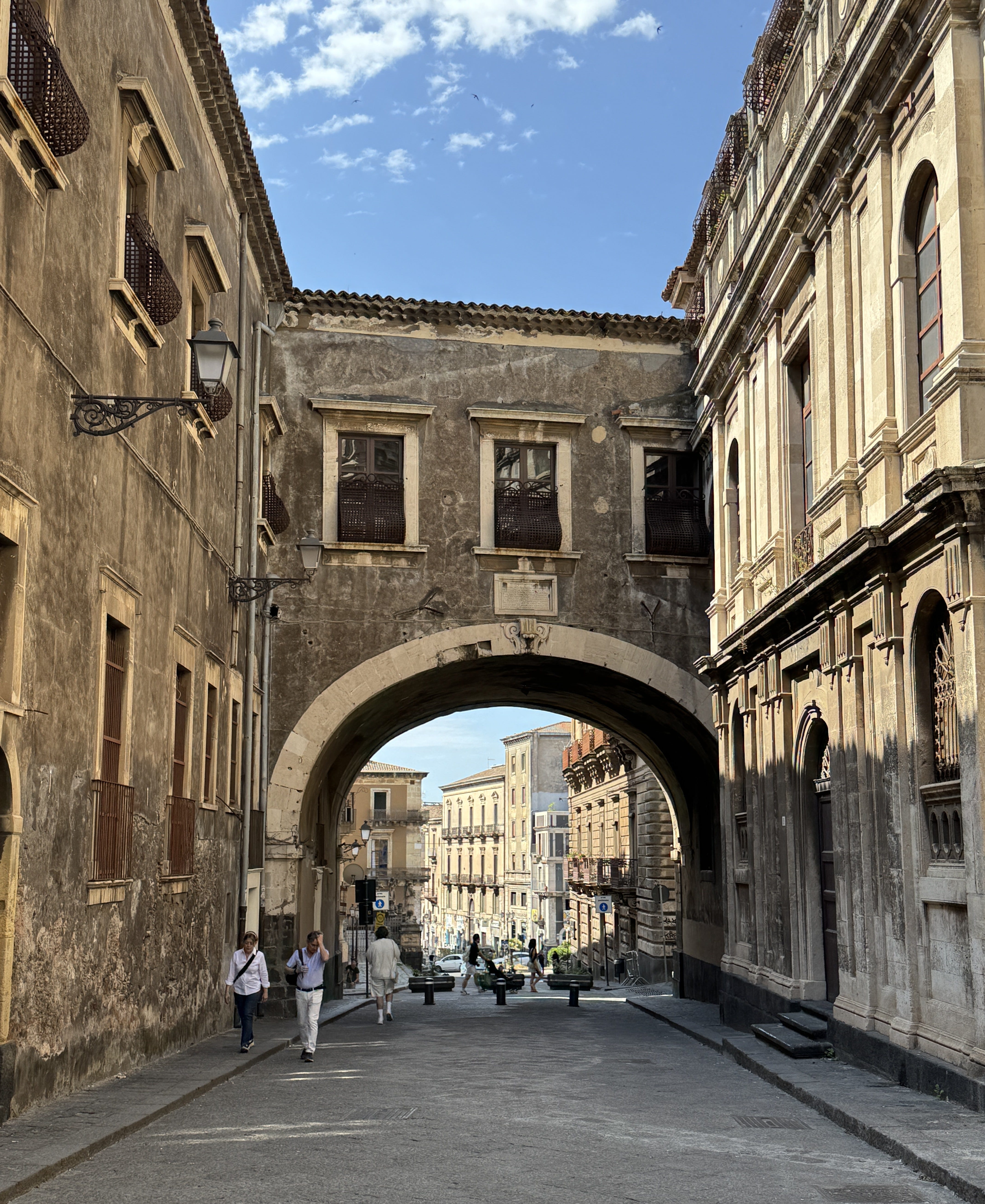
Via Crociferi is another stop that will definitely be on your tour. This street, which is considered a World Heritage and UNESCO Site, is stunning, packed with an incredible amount of Baroque architecture. It’s been dubbed the “Baroque living room of Catania.”
Once you enter through the dramatic Arch of San Benedetto, there’s a line-up of ornate 18th-century churches, including San Benedetto, San Francesco Borgia, San Giuliano, and San Camillo. Each has its own layers of history and makes you feel like you’re walking through a living museum.
San Benedetto is known for its incredible Baroque frescoes that represent various virtues, as well as significant periods from the life of St. Benedict. The colors explode, particularly in those above the altar, which is the focal point of the church.
San Francesco Borgia is notable for its three naves and also its famed artwork, while San Giuliano was the oldest of the female monasteries in the city. And San Camillo has the convent of the Padri Crociferi, from which the street takes its name.
You might hear your guide tell you that some locals think this area has an eerie quality, which is most likely due to the legend of the headless horse. Story has it that back in the 18th century, nobles used Via Crociferi for their clandestine affairs. To deter people from going on this street late at night, they spread a rumor that the ghost of a headless horse ran through the street after midnight. Being superstitious, the townspeople believed this tale and left the area alone.
One day, a young man set out to prove that the story was bogus. He went to the street around midnight and drove a nail under the Arch of San Benedetto as evidence that he had been there and that there was no headless ghost. Anxious to get out of the place, he acted quickly, but then he felt his cloak being pulled from behind him. He turned to see who was holding him, but saw no one. This terrified him, and he had a heart attack and died. The next day, his body was found on the ground with his cloak tangled up around his neck.
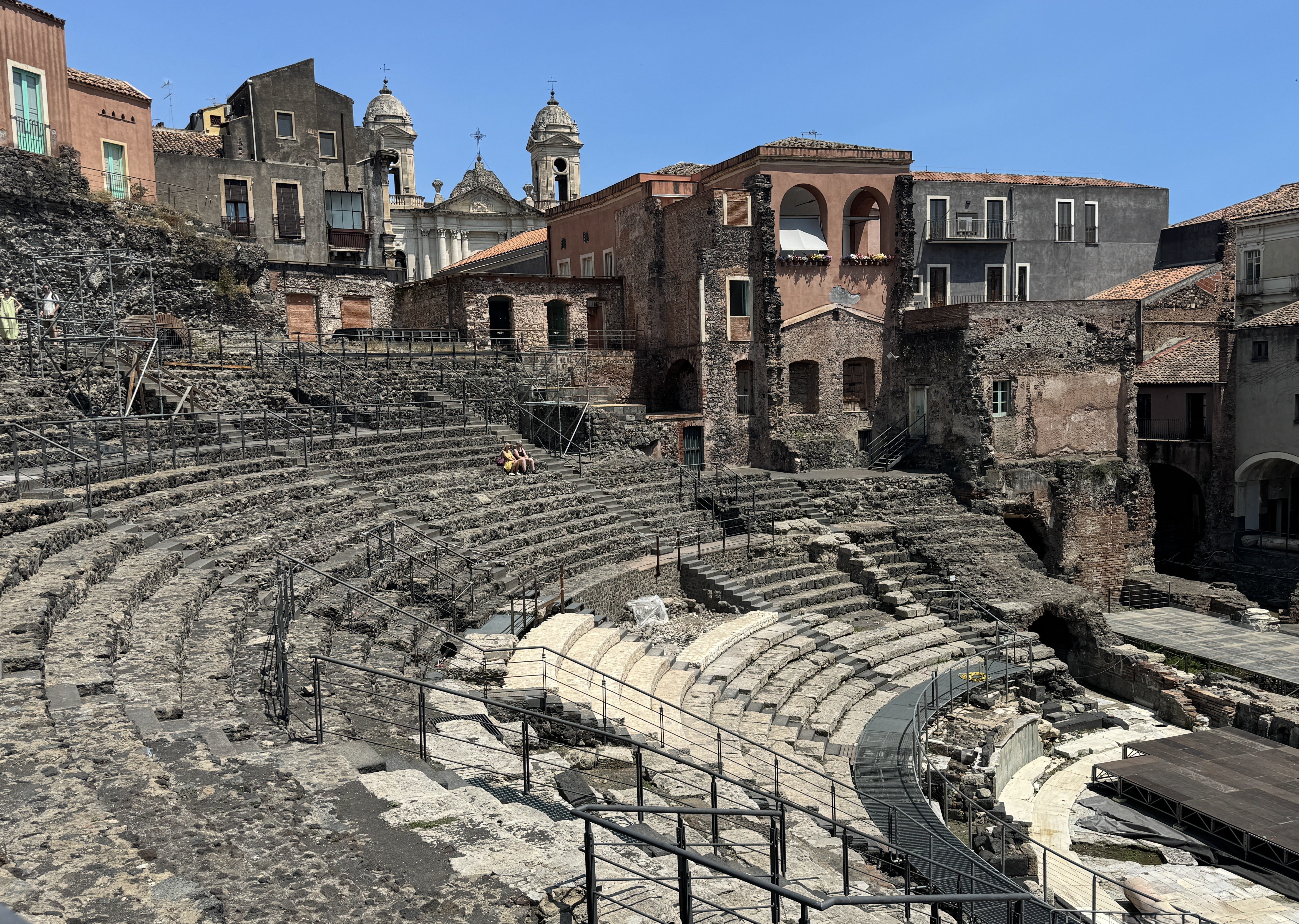
The Greek-Roman Theater is a definite highlight. Likely built in the 2nd century A.D. over the ruins of a prior Greek theater, this massive space had a seating capacity of 7,000 spectators with nearly two dozen rows of seats. It’s truly a “wow” moment when you catch sight of this ancient marvel after going through the unassuming entrance and passing by various statuary and artifacts.
This theater is not to be confused with Catania’s Roman Amphitheater, which is off of Piazza Stesicoro. Made of lava stone and red brick for its arches, this arena once accommodated 15,000 people and was one of the largest in the Roman world. It fell into disuse in the 4th century, and then the big earthquake caused further destruction. Now, only a small section of the structure is visible, below ground level. The rest remains buried under new construction.
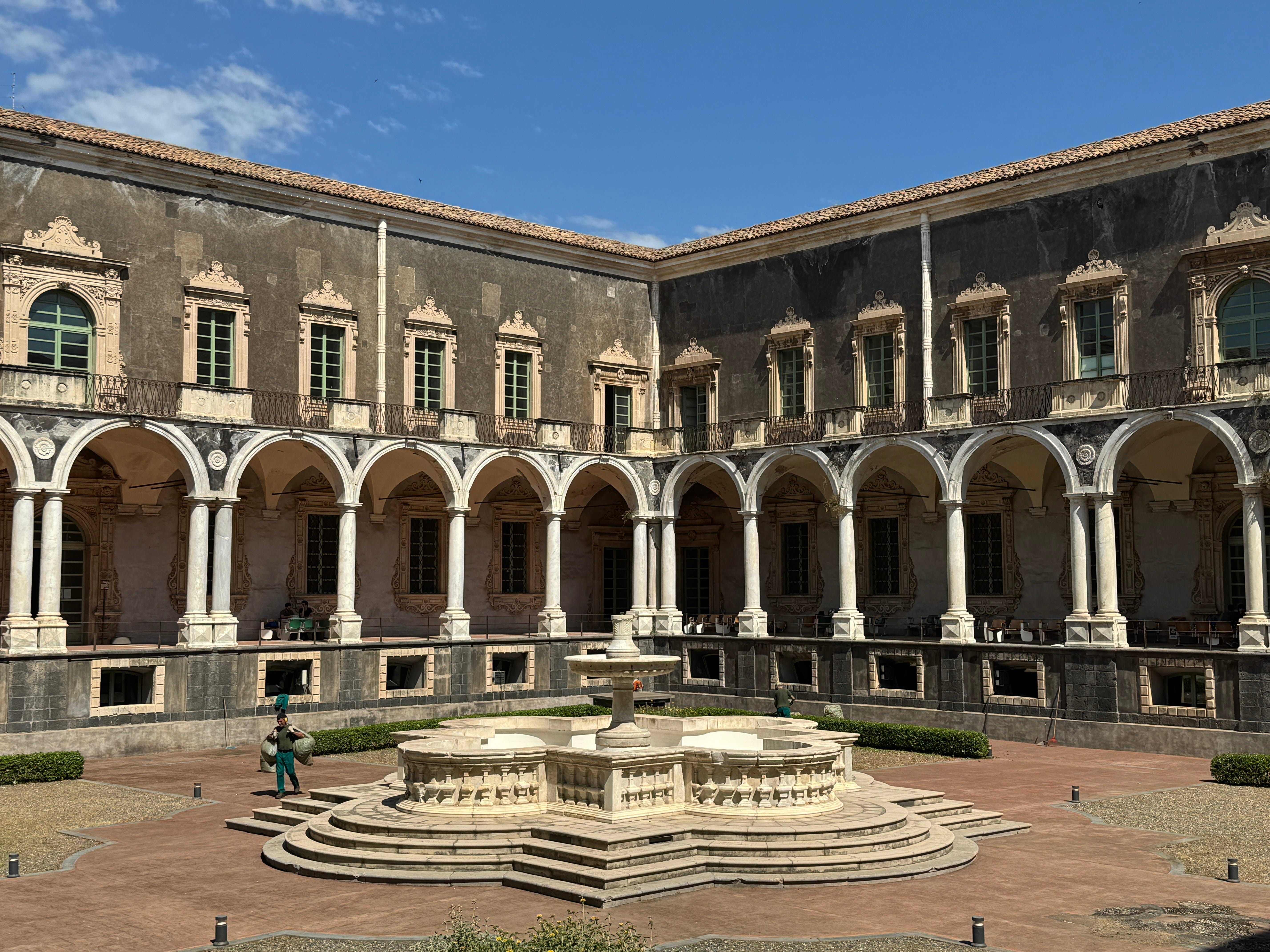
Put the historic Monastery of San Nicolo l’Arena on your list, too, as your tour might not include a stop here. Today it’s the home to the University of Catania, but you can visit for free and explore the courtyard, exquisite cloisters, and lovely garden. It’s a nice spot to roam on your own, though tours are available.
For all your shopping needs, head to Via Etnea, Catania’s main drag. The street is lined with stores, restaurants, cafes, bars, etc. Look towards the end of this thoroughfare, and you’ll see Mt. Etna, whose crater always has a circle of smoke.
If you want to escape the hubbub and crowds, particularly on this busy street, make a beeline for Villa Bellini gardens. Mornings or evenings are best for a peaceful stroll through this expanse of greenery with its flowers, pavilions, and scenic viewpoints.
For those interested in exploring the city’s hidden world, I recommend taking an “Underground Catania” tour. You’ll visit several sites that will either take you down into the subterranean or show you such areas from above.
The Baths of Achilliane is one example. These excavated ruins are located beneath the cathedral site and date back to the 4th and 5th centuries. You’ll walk along special pathways to view the thermal system of streams and pools, imagining Romans “taking the waters” for healing and relaxation purposes.
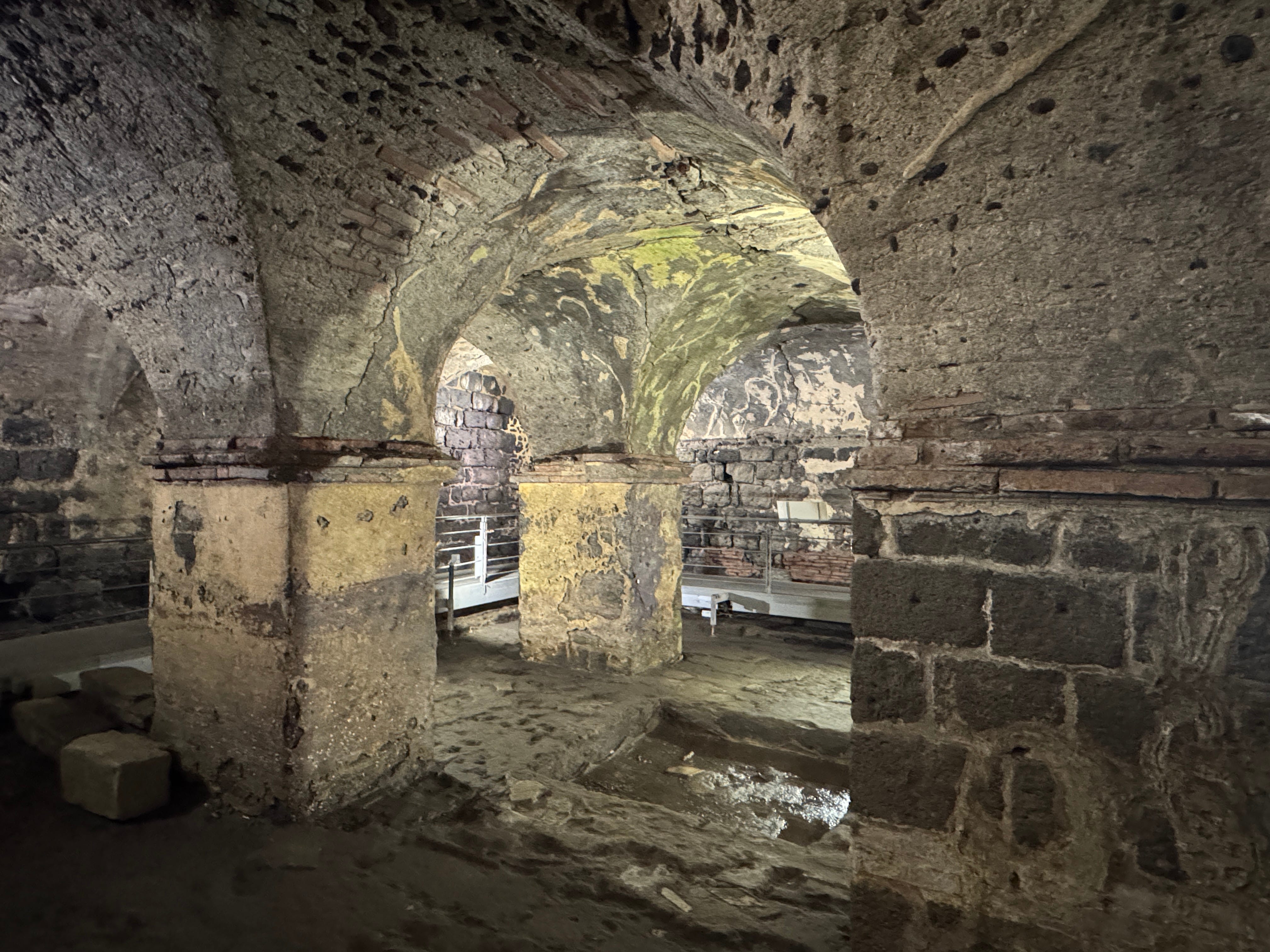
The water well of Gammazita is another. This is a mysterious spot, about forty feet below street level, under an imposing lava front caused by Etna’s eruption in 1669. To get to the area, you’ll descend sixty steps via a series of irregular stone stairs.
The well has a legend attached to it. Your guide will regale you with the story of a young girl named Gammazita, who used to go to the well to get water. A French soldier fell in love with her, but before their wedding day, she refused him. The soldier then waited until Gammazita returned to the well before attacking her. With no other viable means of escape available to her, she threw herself into the well, preferring death.
The Ursino Castle is another stop on the tour, though when I was there, it wasn’t open due to renovation work. We viewed it from the outside, while our guide told us that it was the royal residence of various rulers of many dynasties in Catania. And at one point in its history, part of the castle was used as a prison.
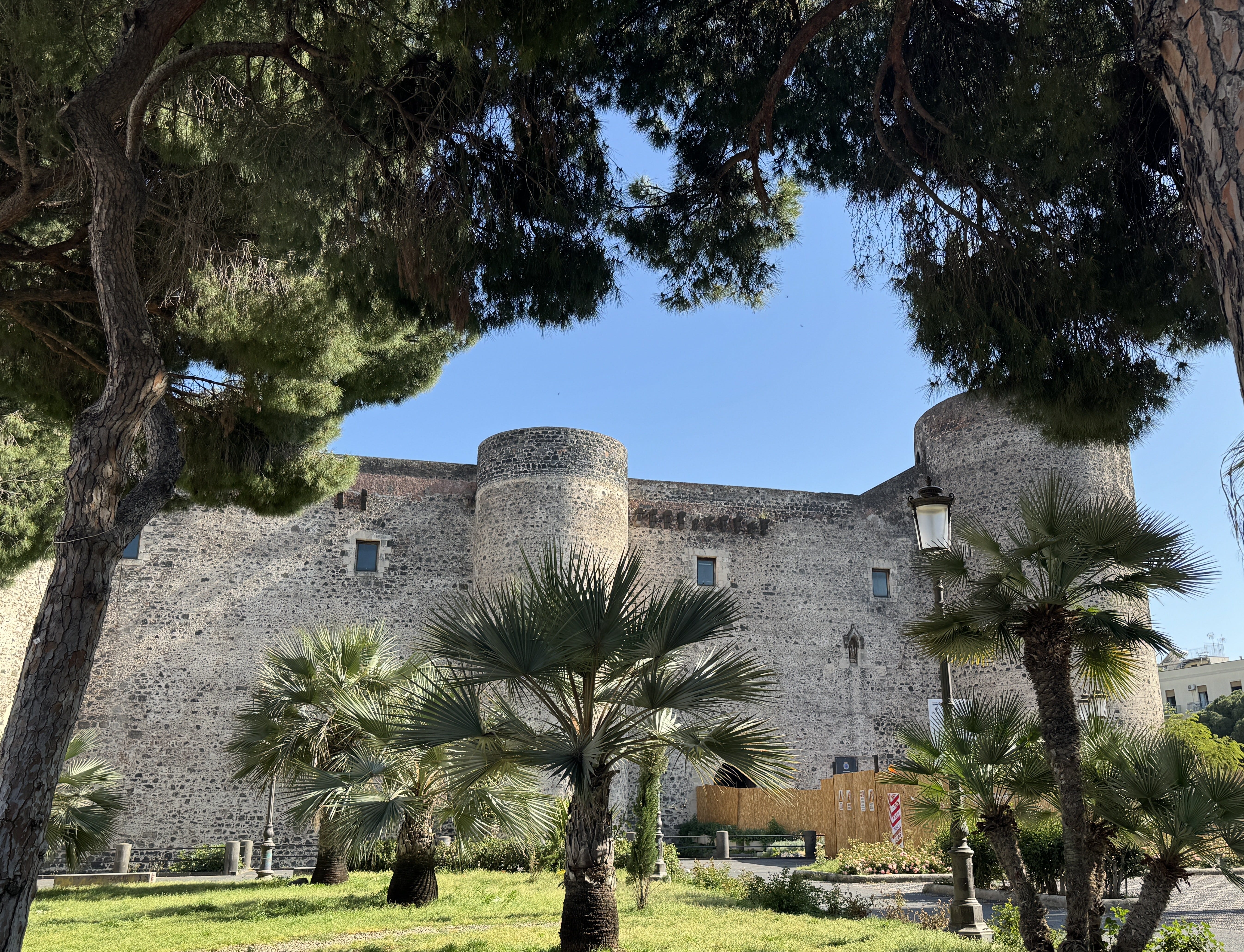
Later, during the famous eruption of 1669, the lava came around the castle, filled in the moat, covered the ramparts, and shifted the coastline. This is why the castle is no longer by the sea. Surprisingly, the lava didn’t destroy the castle structure. But then came the 1693 earthquake, which did significant damage to the structure.
Then there’s Grotta dell’ Ostello, a natural lava cave crossed by the Amenano River that flows under the city. The cave was formed by the same violent volcanic eruption as noted above. What makes this place extra special is that it’s under a restaurant. Later, I returned to have a candlelit dinner within the cave. A most memorable experience!
Debbie Stone is an established travel writer and columnist, and regular contributor for Big Blend Radio and Big Blend Magazines, who crosses the globe in search of unique destinations and experiences to share with her readers and listeners. She’s an avid explorer who welcomes new opportunities to increase awareness and enthusiasm for places, culture, food, history, nature, outdoor adventure, wellness, and more. Her travels have taken her to nearly 100 countries and all seven continents.
Subscribe to Debbie’s “Global Adventures” Podcast and Enjoy Articles & Episodes on the digital “Global Adventures” Magazine!