Exploring Easter Island
Culture, Legend and the Mysteries of the Moai

Listen to Debbie Stone’s Big Blend Radio podcast episode below, then dive deeper into her written feature. Together, the podcast and article provide an immersive look at the mysteries, cultural heritage, and travel experiences that make Easter Island such a compelling destination.
LISTEN TO THE PODCAST:
EASTER ISLAND OFFERS VISITORS A UNIQUE BLEND OF CULTURE, LEGEND & LANDSCAPE
By Debbie Stone
As I gazed at the massive monolithic figures before me, I experienced a sense of awe and wonder amid an aura of mystery. These enigmatic statues, called moai (meaning “to exist”), were carved by ancient civilizations centuries ago, and they are found on Easter Island, also known as Rapa Nui.
This remote volcanic island, located in the southeastern Pacific Ocean, is part of Chile. It requires some effort and expense to reach this legendary destination, as you first need to travel to Santiago, on the mainland of Chile, and then take a five-and-a-half-hour flight for the 2,330-mile journey. Flights are limited to twice a day to combat over tourism, as the island is very small, measuring only fourteen miles long by seven miles wide
There are roughly 8,000 people living on Rapa Nui, approximately forty percent of whom are native to the island and have Polynesian origins. The predominant languages spoken are Rapa Nui and Spanish, the latter a result of more people moving here from the mainland. Much concerted effort is made to keep the native language of Rapa Nui alive, due to its importance in preserving the history and culture of the place.
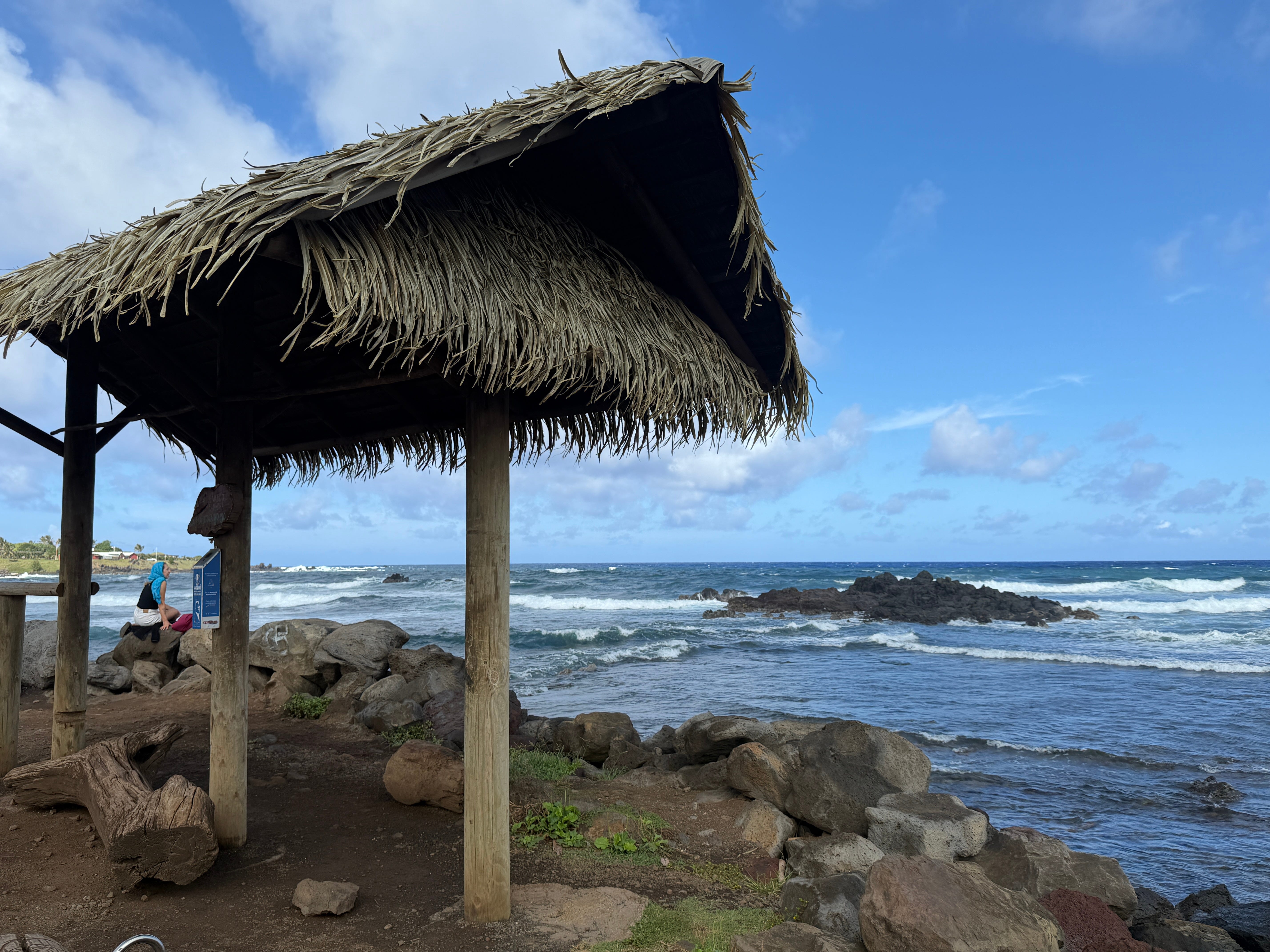
The majority of the people live in Hanga Roa, on the west and more sheltered side of the island. This is also the area where most visitors stay, as it contains all the necessary services, including hotels, restaurants, shops, and the airport, etc.
Rapa Nui has a lengthy history. Researchers have theorized that the first settlers probably made their way here from the direction of the Marquesas Islands, approximately 1000 AD. One story has it that the king of the Marquesas had a dream that his lands would soon be underwater. He sent some of his explorers to seek a new homeland. They discovered a lush island, devoid of people, which eventually became Rapa Nui.
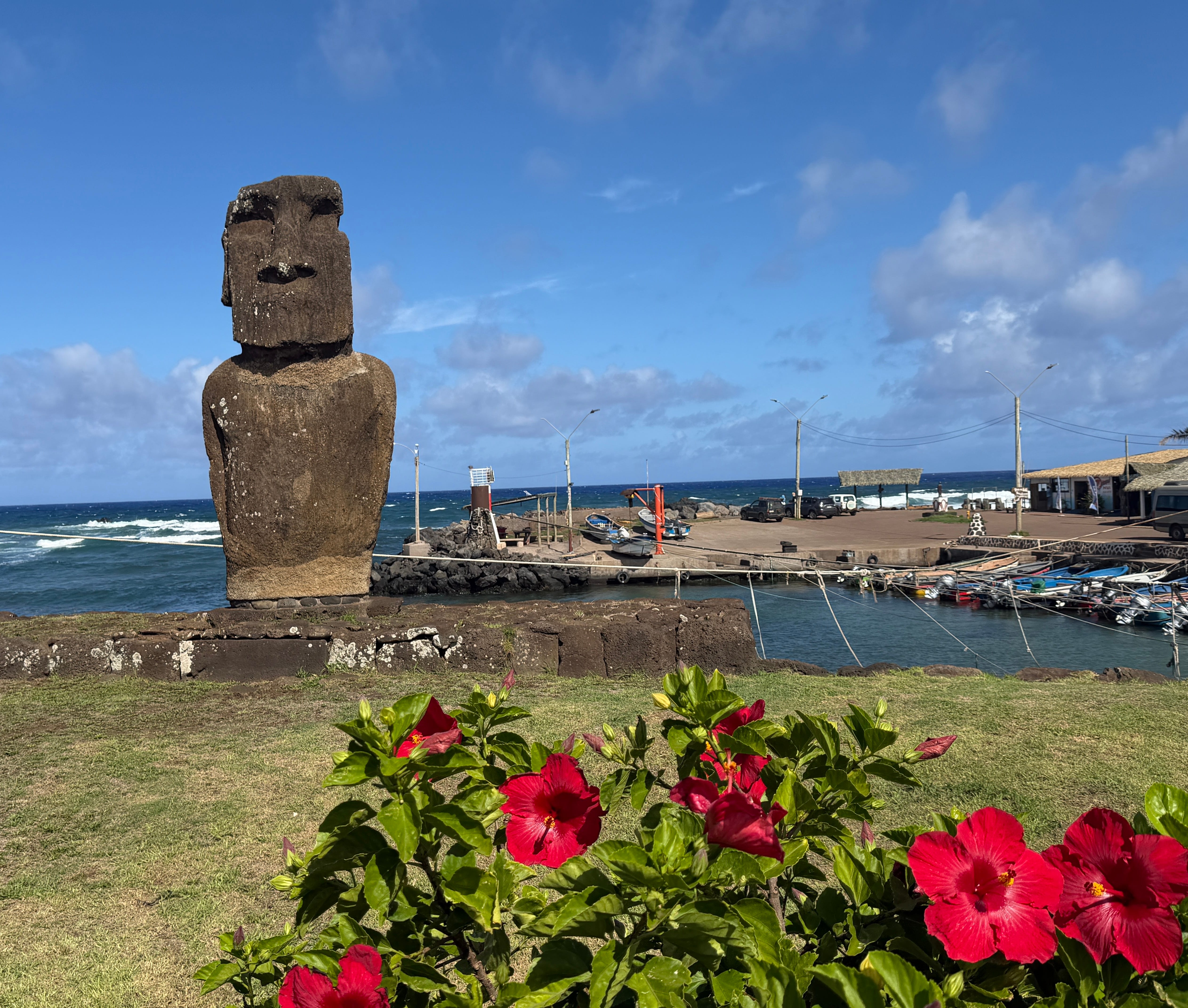
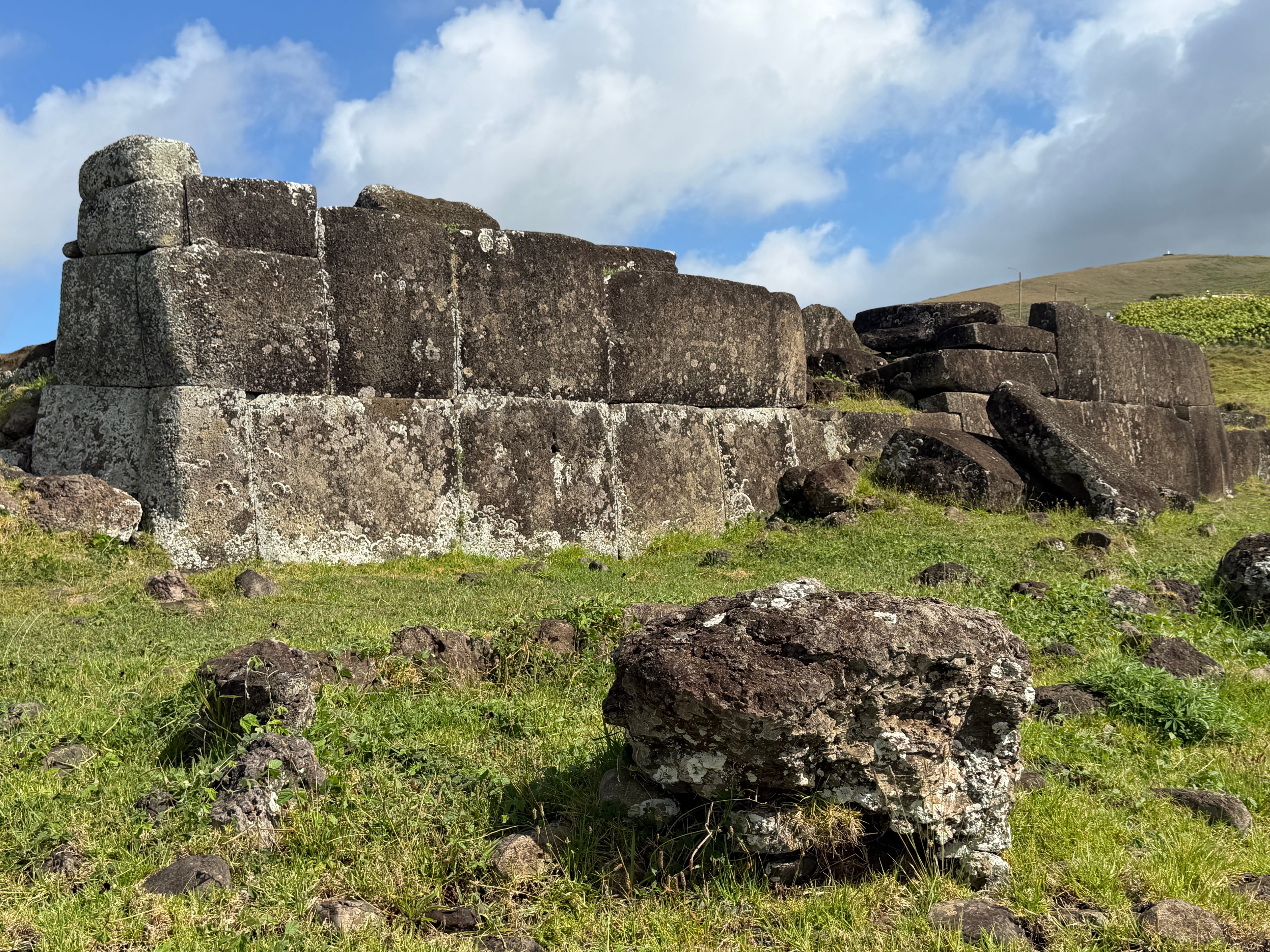
Over the years, the civilization on this island grew and became more advanced, as crops flourished and the people had plenty of food. This left time for some of the men to focus on developing a tradition of building large rectangular stone platforms, or ahu, to bury their kings and important people. Though the majority of the moai are male representations, there are about a dozen statues with feminine body traits.
Atop these grave platforms, they constructed multi-ton megaliths, the moai, from volcanic tuff, to commemorate those who had passed away. They would first outline the figures in the rock wall, then chip away at them with basalt stone picks to carve the images. Clans or families from different tribes would buy these mammoth statues, which ranged in height, some towering over thirty feet.
Transporting the moai to their specific sites, often many miles away, would have been an arduous task, as they were very heavy (weighing up to 163,000 pounds). Researchers and scientists have long puzzled over how the people were able to move the statues. Some postulate that wood hoists and ropes were used to transport them vertically in a controlled “walking” motion. Though there is still some mystery surrounding the moai, the fact remains that the production and transport of these statues is a remarkable creative and physical feat.
As time went on, wood became less common because the tree forests were cut down, depleting this resource by the 17th century. Finished moai awaiting transport began to amass in the volcanic quarry of Rano Raraku, where all the statues were carved. Ultimately, the carvers ceased working.
Today, there are 887 moai scattered across Rapa Nui. Some stand as tall and proud sentinels, most that face inland as if to watch over the village of the tribe that owned the ahu. Many others, however, lie broken in pieces on the ground. These were toppled in the late 18th and early 19th centuries, either as a result of warfare among the different tribes or from European contact.
The moai are revered and considered to be sacred, holding much cultural and historical value. They are renowned and are primarily responsible for putting the island on the tourism map, attracting visitors from across the globe.
The first well-documented European contact on the island occurred in 1722 with the arrival of Dutch Admiral Jacob Roggeveen. He came on Easter day and chose to name the island thereafter.
More European visits increased during the 19th century. This, however, ushered in a difficult and tumultuous period for the people of Rapa Nui, beginning with the slave raids. Fifteen hundred islanders were kidnapped and taken to work as slaves in Peru, including the ruling king. A few of these were later released, all of which died of smallpox on the return voyage, except for two. These two subsequently spread the disease to the rest of the Rapa Nui population, which purportedly numbered in the thousands at that time. A few years later, only 111 people remained on the island.
Then came Catholic missionary Eugenio Eyraud, who had heard about the tragic happenings. He established a Catholic mission on the island, and together with other missionaries, proceeded to convert the people to Christianity. In the process, they also forced them to abandon their traditional practices.
In 1888, Rapa Nui became Chilean, giving Chile full and entire sovereignty over the island. The people were basically left alone until 1903, when the British company Williamson Balfour & Co. signed a contract to lease the island as a sheep farm for fifty years. At first, the islanders were fenced in around established borders and guarded to prevent sheep theft. But after 1936, they were able to visit the countryside, though only if they had written permission. Following WWII, the company did not renew the contract and left Rapa Nui for a number of reasons, most prominently the invention of synthetic wool.
The entire island is a UNESCO World Heritage Site, and much of it is protected within Rapa Nui National Park. Entry to the park is only permitted with a certified local guide, and you must have a Rapa Nui National Park ticket, which can be purchased online. The ticket is good for ten consecutive days.
Having a guide greatly enriches your experience, as you will gain much info and background about the various sites, as well as learn about the island’s intriguing past. Another plus is that your guide also serves as the driver. He/she can navigate the rural and rutted roads, where you’ll often encounter numerous cows meandering and blocking the route.
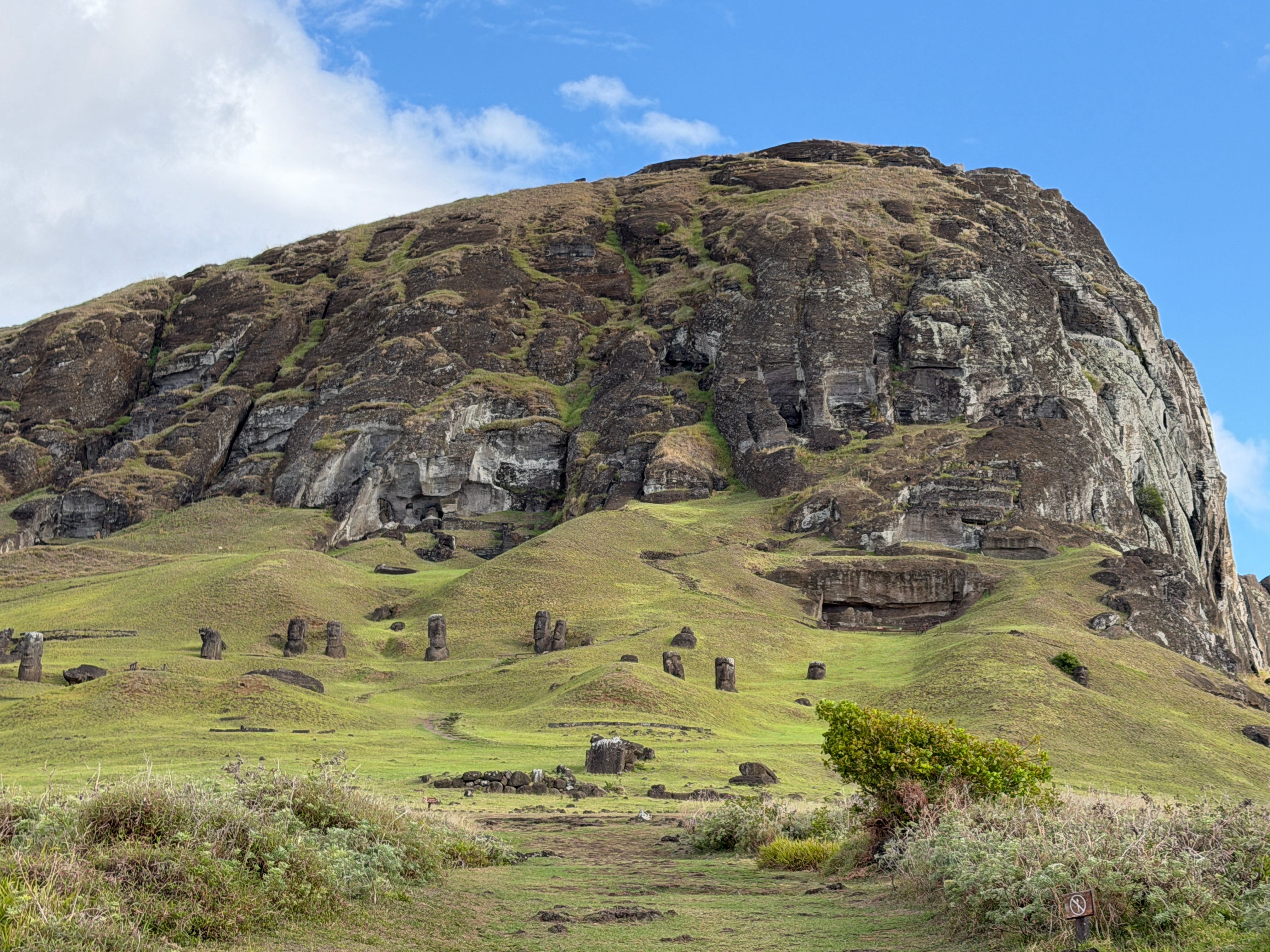
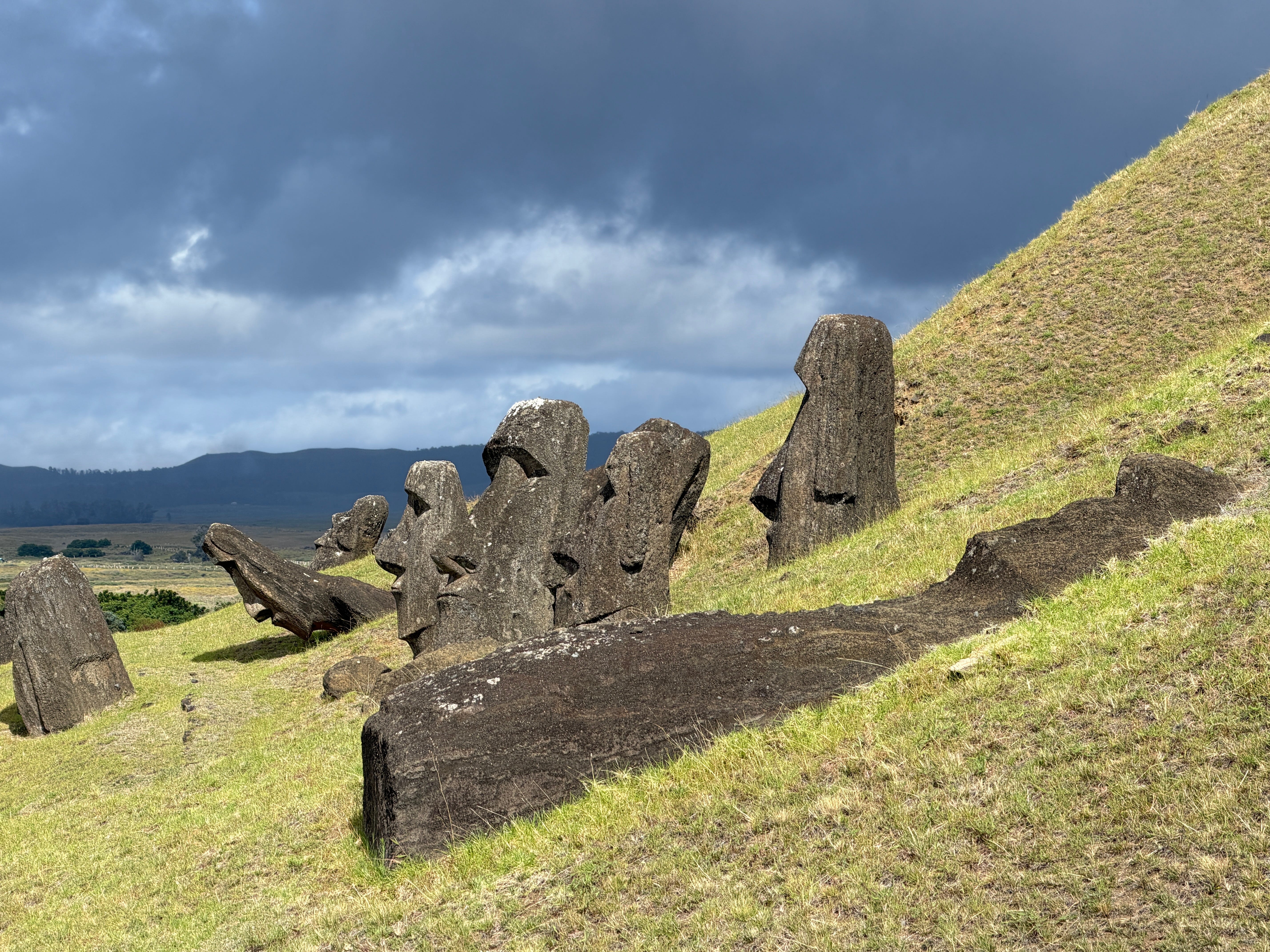
Rano Raraku is a prime attraction, as this is where all of the island’s iconic moai were made. This quarry contains nearly 400 moai, some nearly completed and others still in the process of being carved and not yet removed from the bedrock. All the statues remain as they were left when work was abandoned.
This was my first up close and personal experience with the moai, and although I had seen plenty of pictures of them over the years, I wasn’t prepared for their sheer magnitude and powerful vibe. They captivated me, as well as their compelling stories.
I walked up and down the pathways from mounds to hillsides, examining as many as I could, noting that some were slender, while others were stockier. Each is comprised of a head and torso with arms at their sides and hands clasped together in front. The guide mentioned that when the moai were originally carved and initially erected, they possessed sharp features and details, but over time, and with weathering, some of these details were lost.
I was told to look closely at the bedrock to see the embedded moai. It took a bit to train my eyes, but once I did, I couldn’t stop seeing them. They appeared to be everywhere. And then the guide pointed out the one ginormous moai measuring 69 feet tall that was lying down.
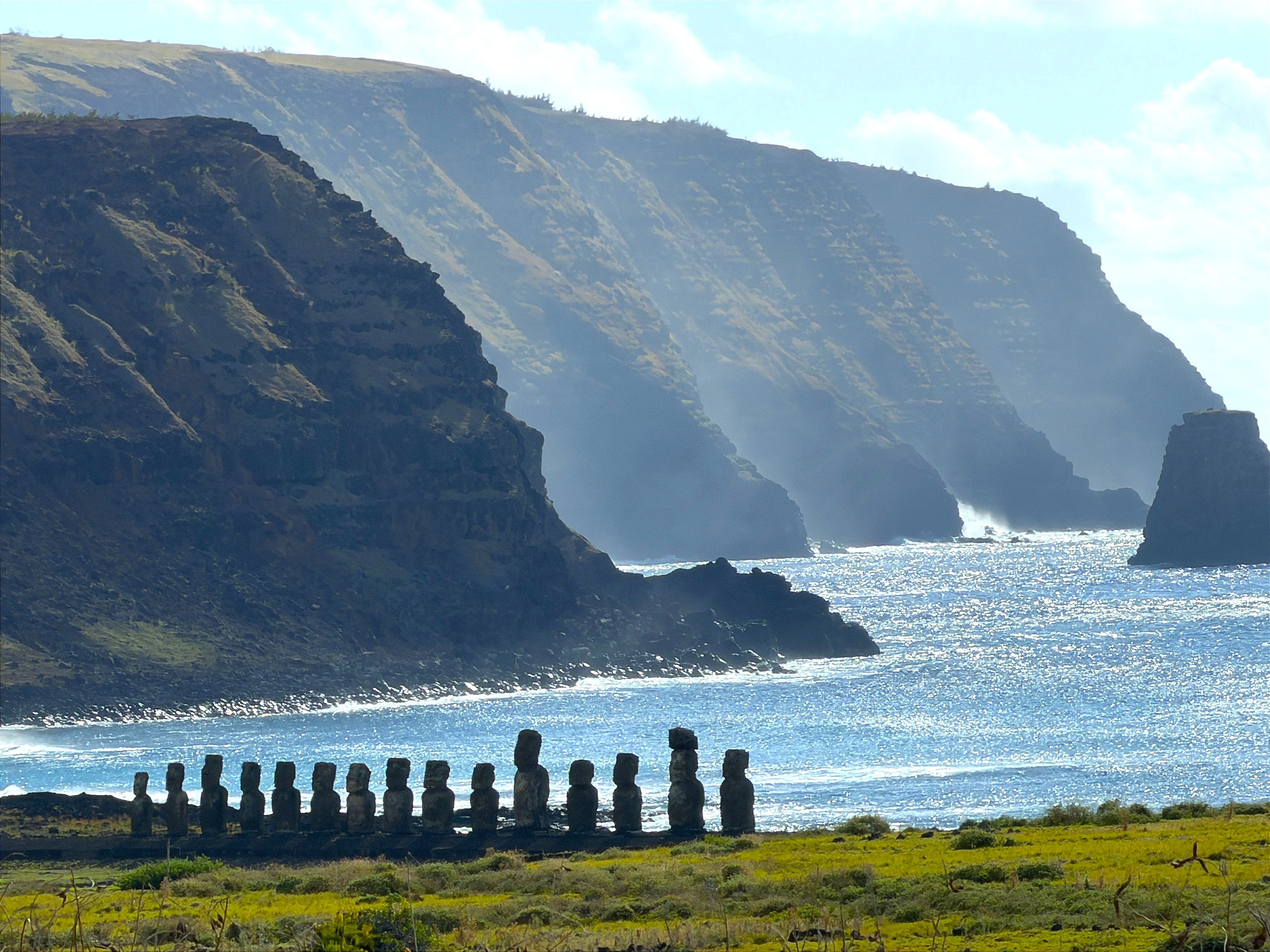
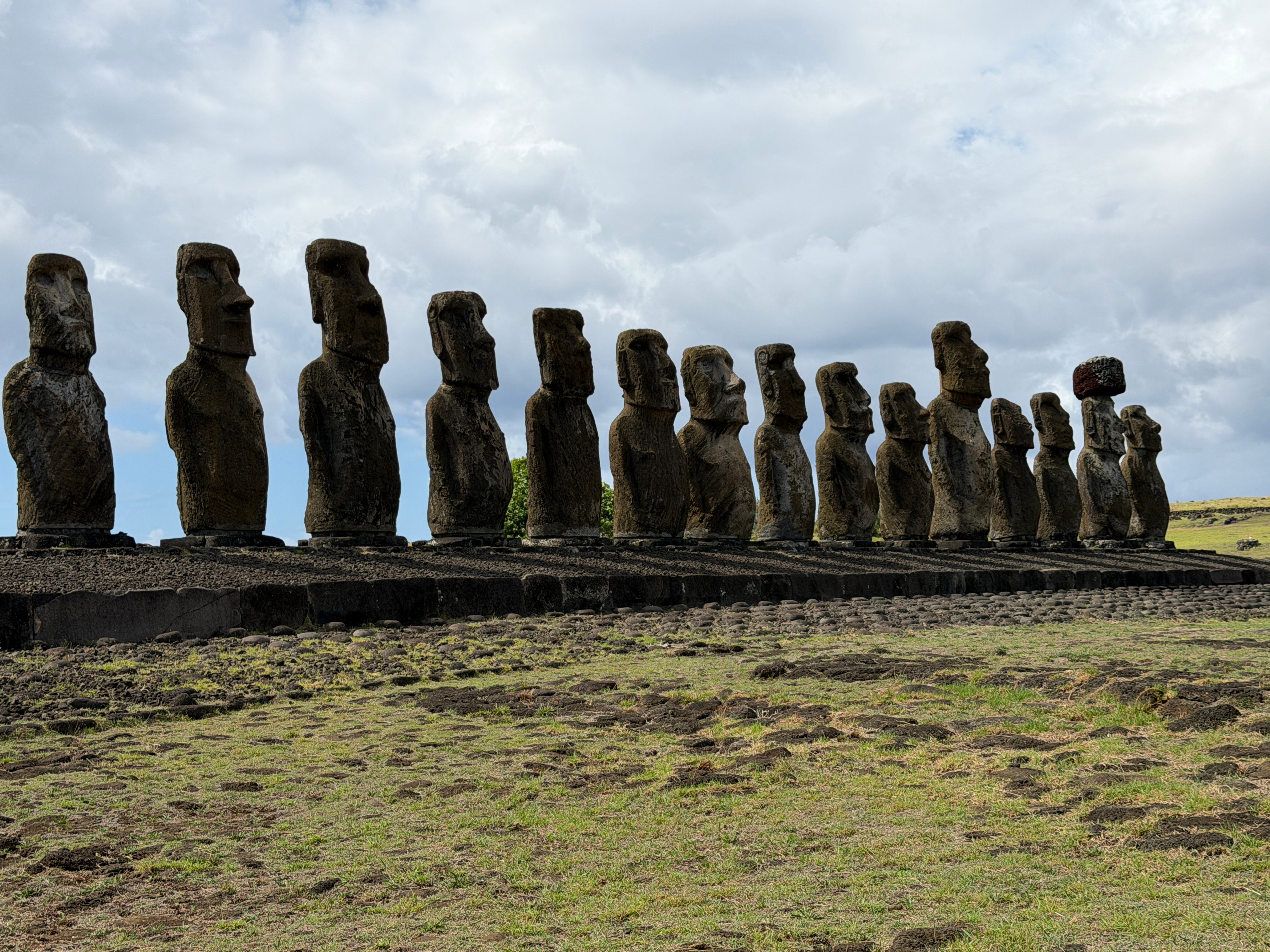
From the quarry, you can also spy Ahu Tongariki, an equally famed site, and its row of fifteen elevated moai. At a distance, it offers a striking picture, set against the ocean and mountains. This is the largest burial place, whose moai were re-erected after a tsunami flattened the statues. A visit here is a must.
Te Pito Kura, meaning “navel of light,” is an archaeological complex that contains a ceremonial center with one moai, named Paro. The statue remains in the same position it was when it was demolished about two centuries ago. It lies face down, body split in half.
Paro has the distinction of being the largest moai transported from Rano Raraku and successfully erected on a platform. Its weight is estimated to exceed eighty tons, while its height reaches 32 plus feet.
Nearby is an interesting stone, oval-shaped, about two and a half feet in diameter. My guide explained that this rock purportedly has a magnetic type of supernatural energy called mana. It has a high iron content and warms up, causing compasses to behave oddly.
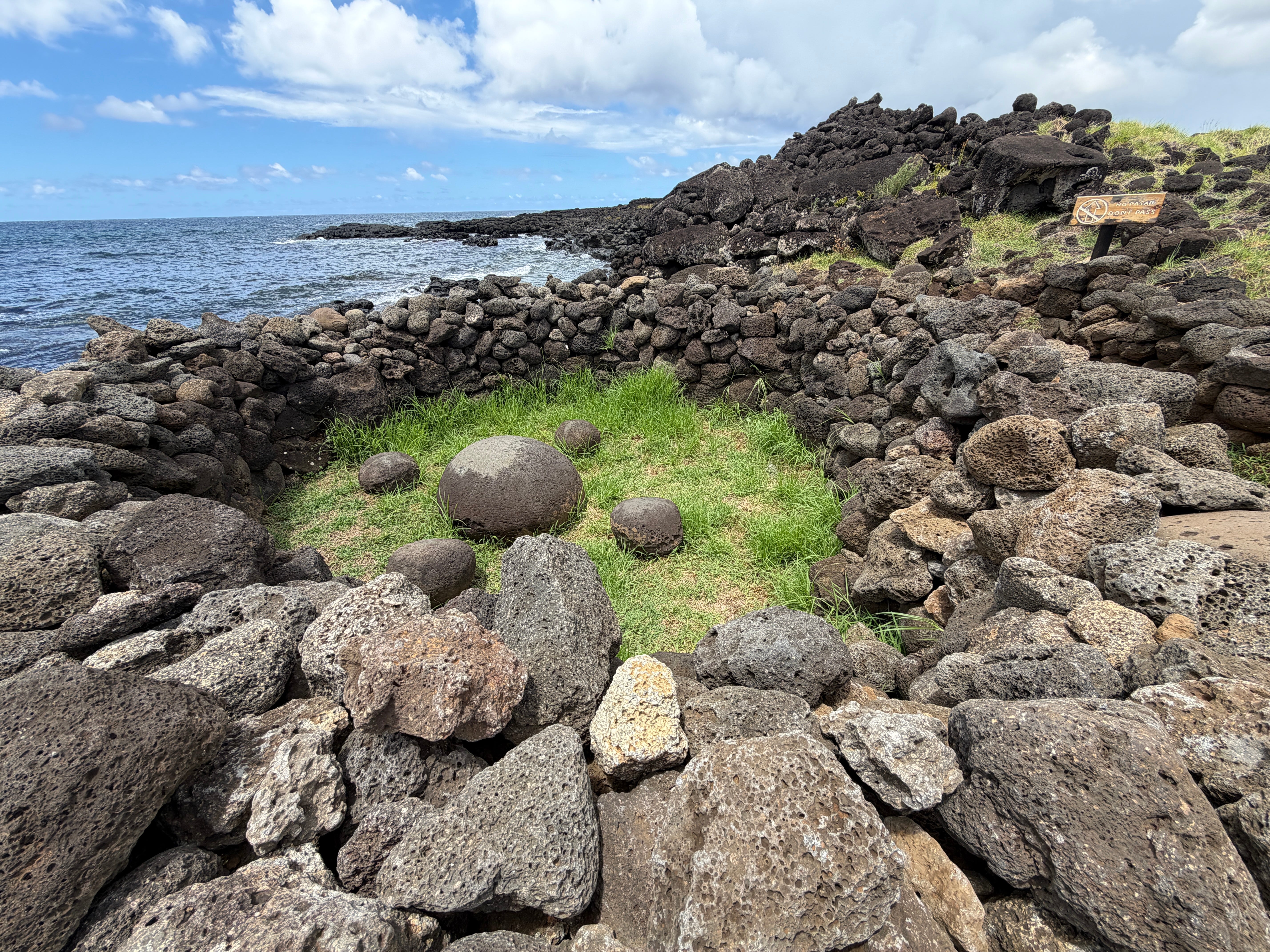
To see the largest ahu on the island, we went to Ahu Heiki’i, which is known for its petroglyphs. In this area are also remains of boat houses and cooking ovens.
Anakena Beach is another notable highlight, not only because it’s one of the few sand beaches on the island, but also because it’s the site of Ahu Nau Nau. Here, seven moai stand in front of the beach against a picturesque backdrop. Among this group are four statues wearing the red scoria topknots. Scoria is a red volcanic rock, found only in the Pun-a-Pau quarry, which I later visited. This rock was used to make the enormous cylindrical hats known as pukao. They measure up to 6.5 feet in diameter and can weigh up to 26,500 pounds each.
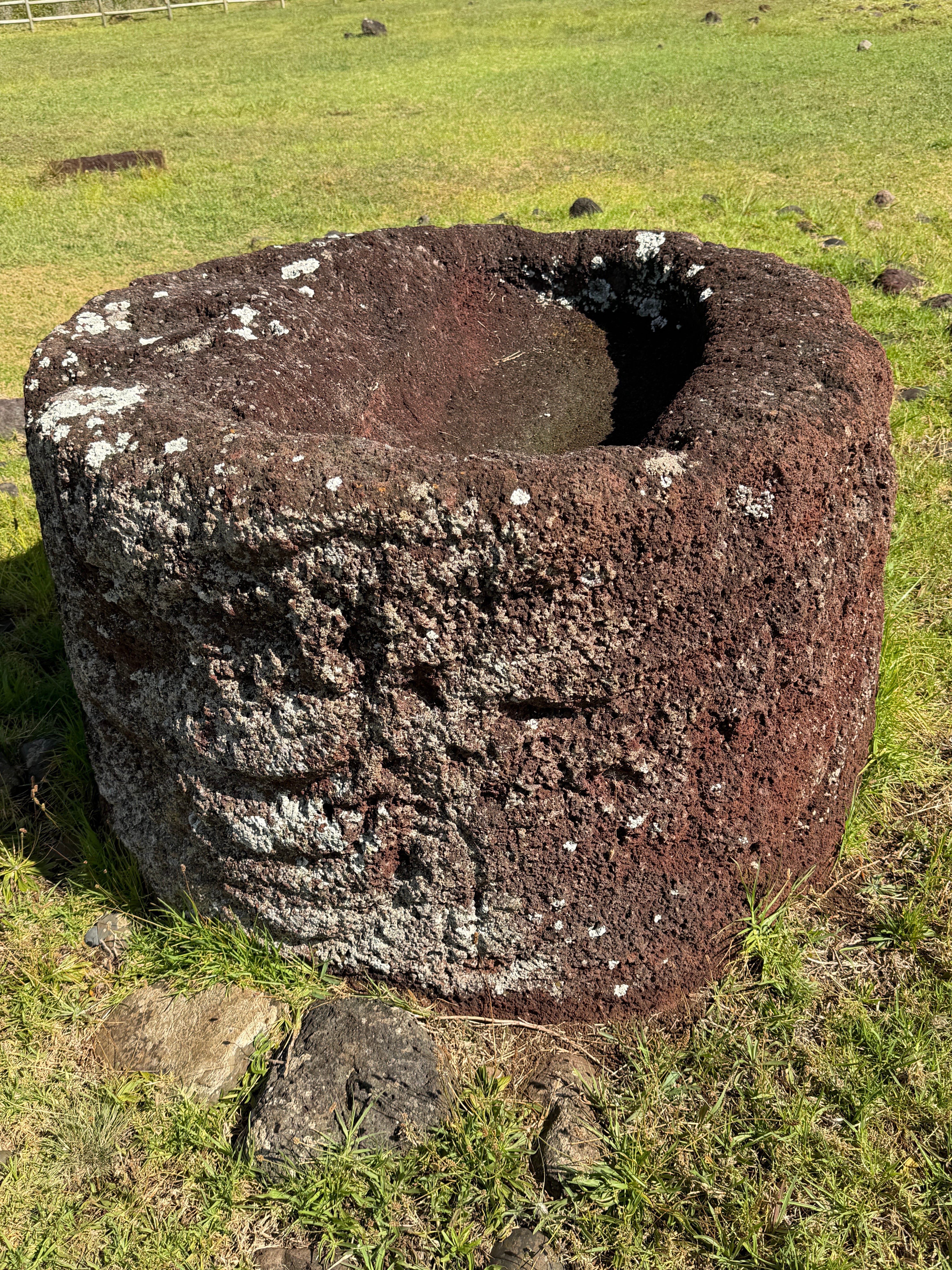
The scoria, I was told, had another use. My guide showed me one that was concave with space to hold a pregnant woman. In this cavity that contained water, she would give birth, with the assistance of other women. These women would act as doulas, providing support during and after the baby was born.
The beach, with its white sand, coconut palms, and turquoise-hued waters, is an idyllic spot. It’s popular with locals and visitors alike, who come to swim in the warm sea and sunbathe. When I was there, beachgoers of all ages were enjoying this paradise-like locale.
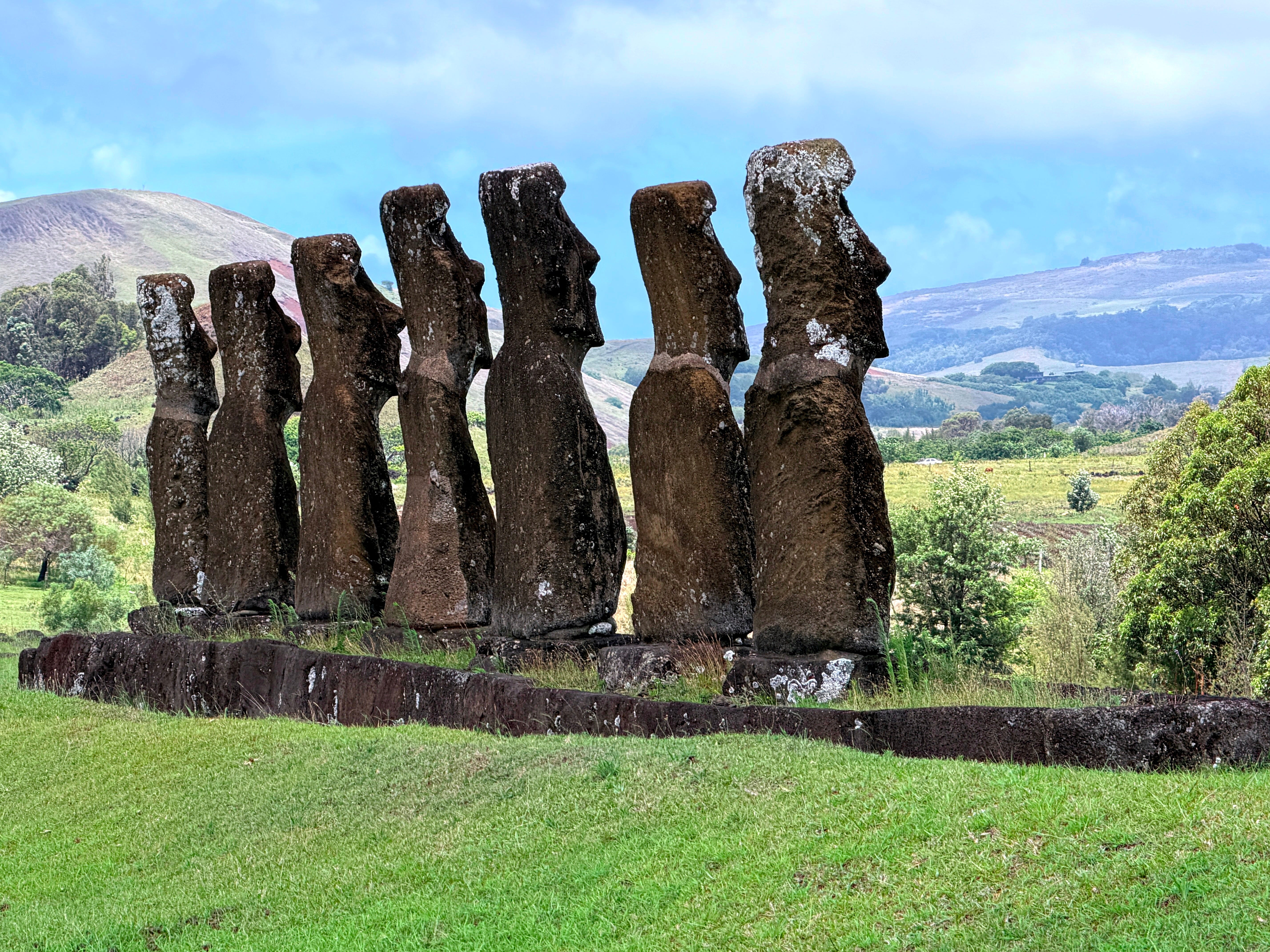
As I mentioned earlier, most moai on the island face inland, but at Ahu Akivi, seven statues form a line facing the ocean. This ahu is located inland and not by the coast, and the village was between the ahu and the ocean. Thus, it is surmised that the moai are positioned towards both the village as well as the sea.
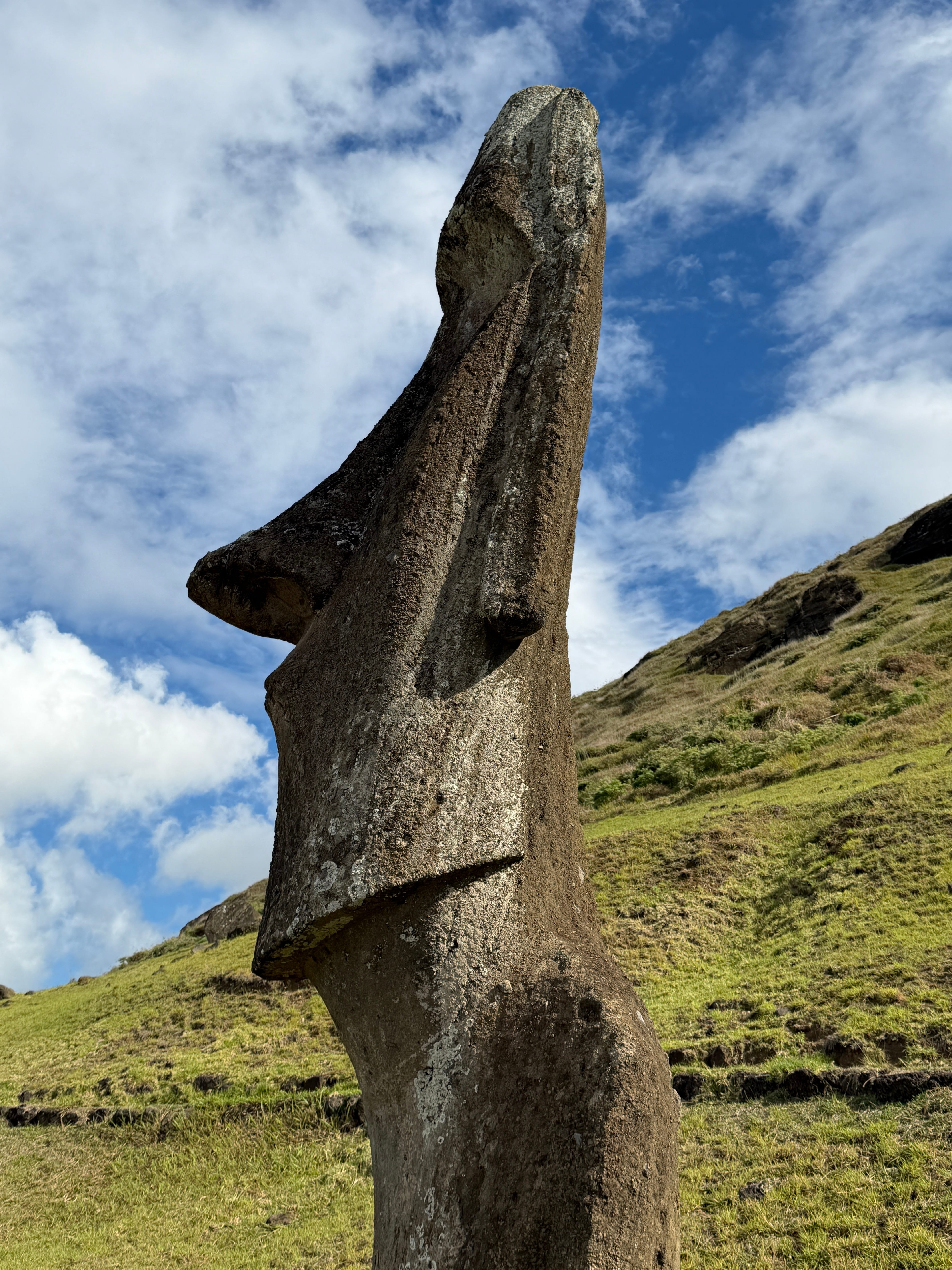
I learned that the statues face the sunset on the spring equinox and have their backs to the sunrise on the fall equinox. It could be that astronomy was another factor in their positioning. Scientists think this place might have been a celestial observatory of some sort, giving it an elevated sacred status.
The Ahu Akivi moai are thought to date back to the 15th century and were restored in the early 1960s. This was the first complete restoration of statues to their platform on the island, and it was helmed by American anthropologist William Mulloy, a professor at the University of Wyoming. He and a team of Rapa Nui men spent more than a year on the project.
As I viewed the statues, I noted they appeared very uniform, unlike others I had seen. This gave the monument some sense of balance and harmony that was easy on my eyes.
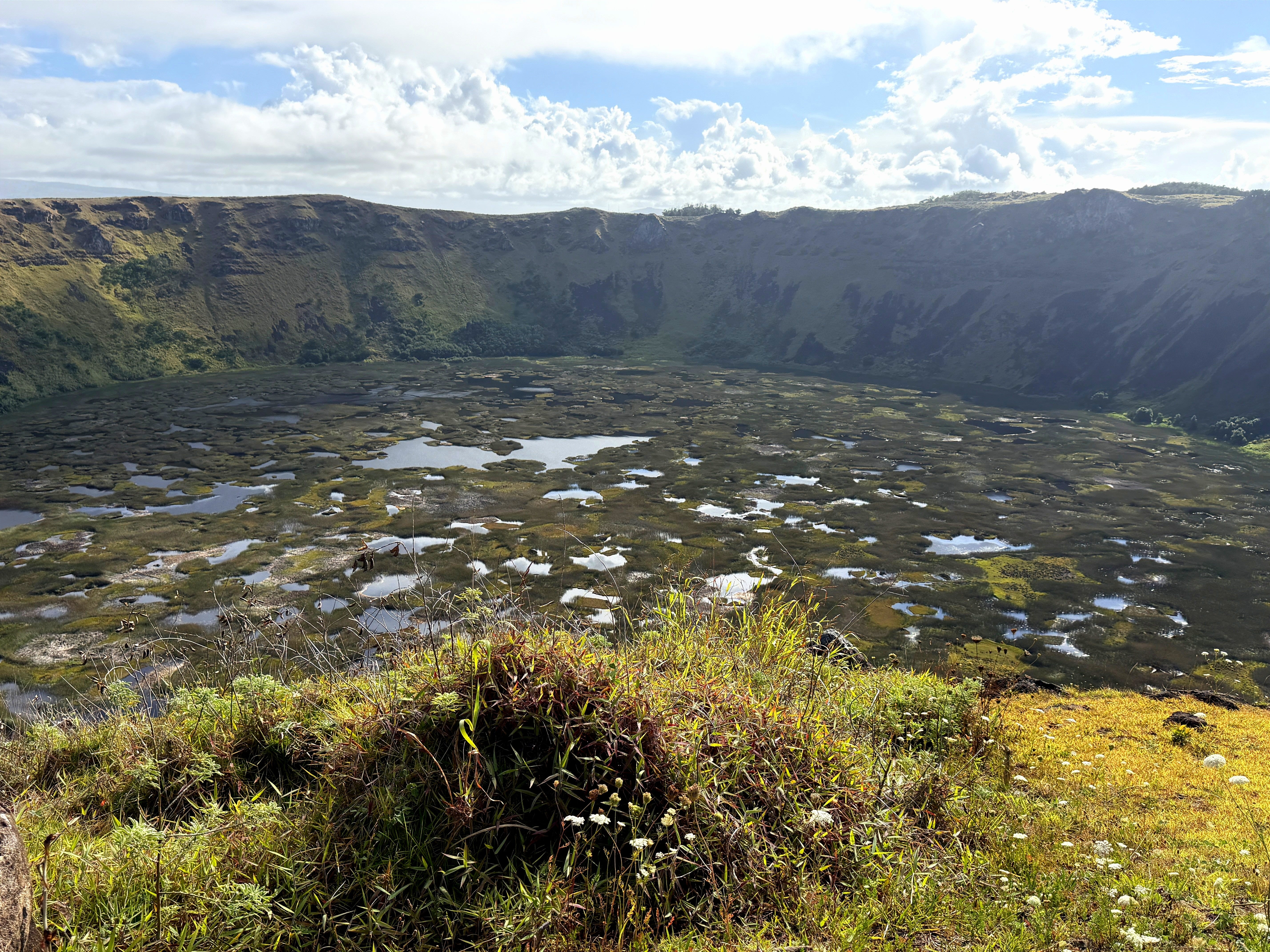
A tour of the island should also include Rano Kau, an extinct volcano that boasts a huge crater, about one mile in diameter, containing a freshwater lagoon, up to 33 feet deep. A variety of plants, including prolific reeds, grow inside this area. The reeds are used in the building of houses and boats.
Erosion has caused parts of the crater to meld with the sea cliffs. Standing at the top of this formation, the panorama was spectacular. I could see the vast ocean, much of the island, and the crater with its lagoon in all its natural beauty.
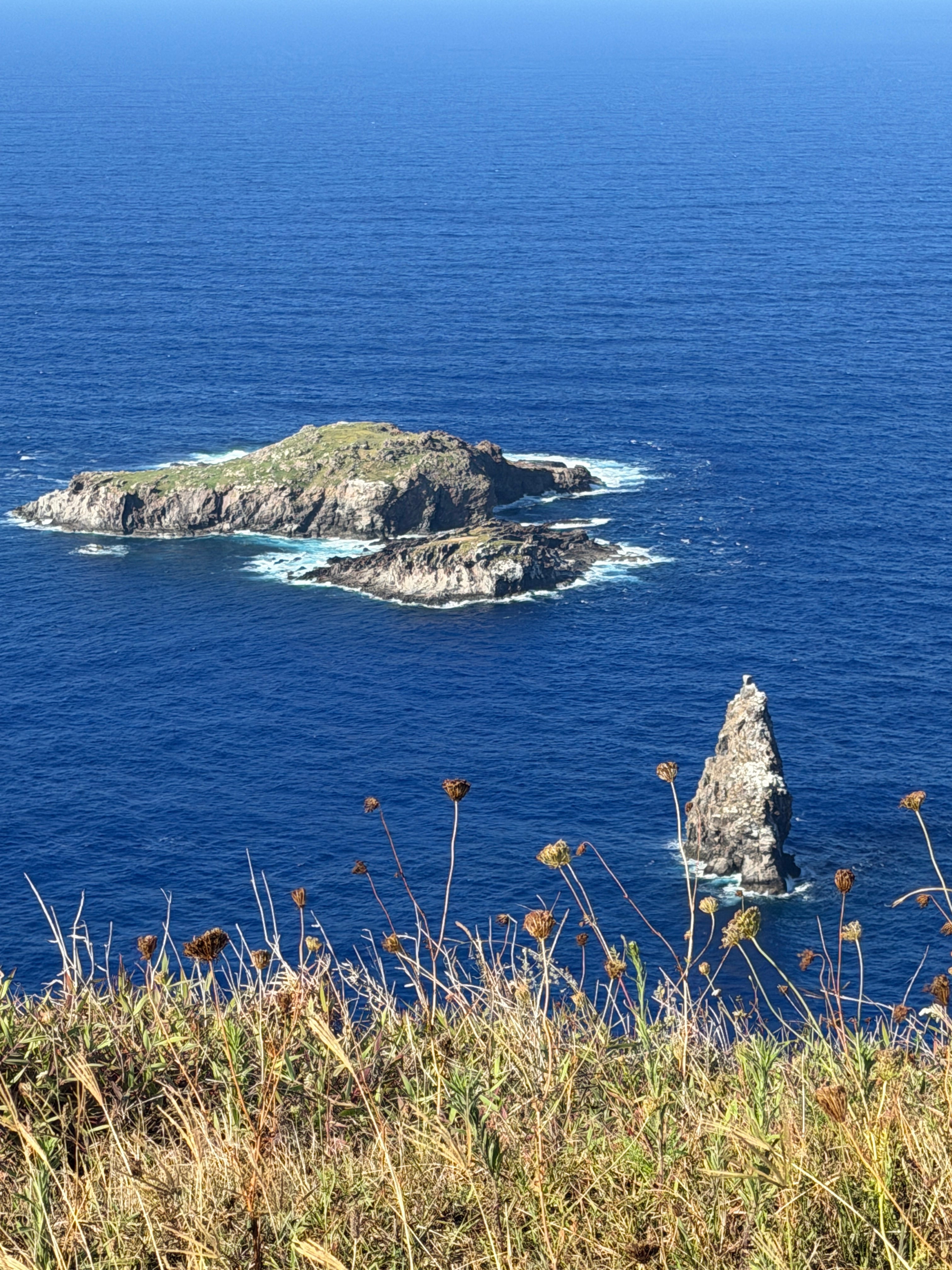
Nearby is the site of the ceremonial village of Orongo, where an ancient ritual took place. The area was inhabited only seasonally by chiefs and participants of ancient tribes, who stayed in cave-like, turf-covered, windowless, round-walled houses with low doors or openings. Several still remain.
Regarding the ritual, contestants were selected each year to compete for the title of Birdman, the headman of the island. Each contestant would sponsor a person of their choice who would embark on a series of challenges. These individuals would have to scale the perilous face of the Rano Kau cliff, swim through shark-infested waters to the small island of Motu Nui, and then wait until a certain seabird species called the manutara or the sooty tern nested and produced an egg. In the Rapa Nui culture, this bird was often associated with the gods.
The first one to find an egg and swim back with it to Orongo, with the egg still intact, was declared the champion. His sponsor, in turn, would be crowned as the Birdman for a term of one year.
The last such competition was held in 1866, after which this event was banned by the Catholic missionaries.
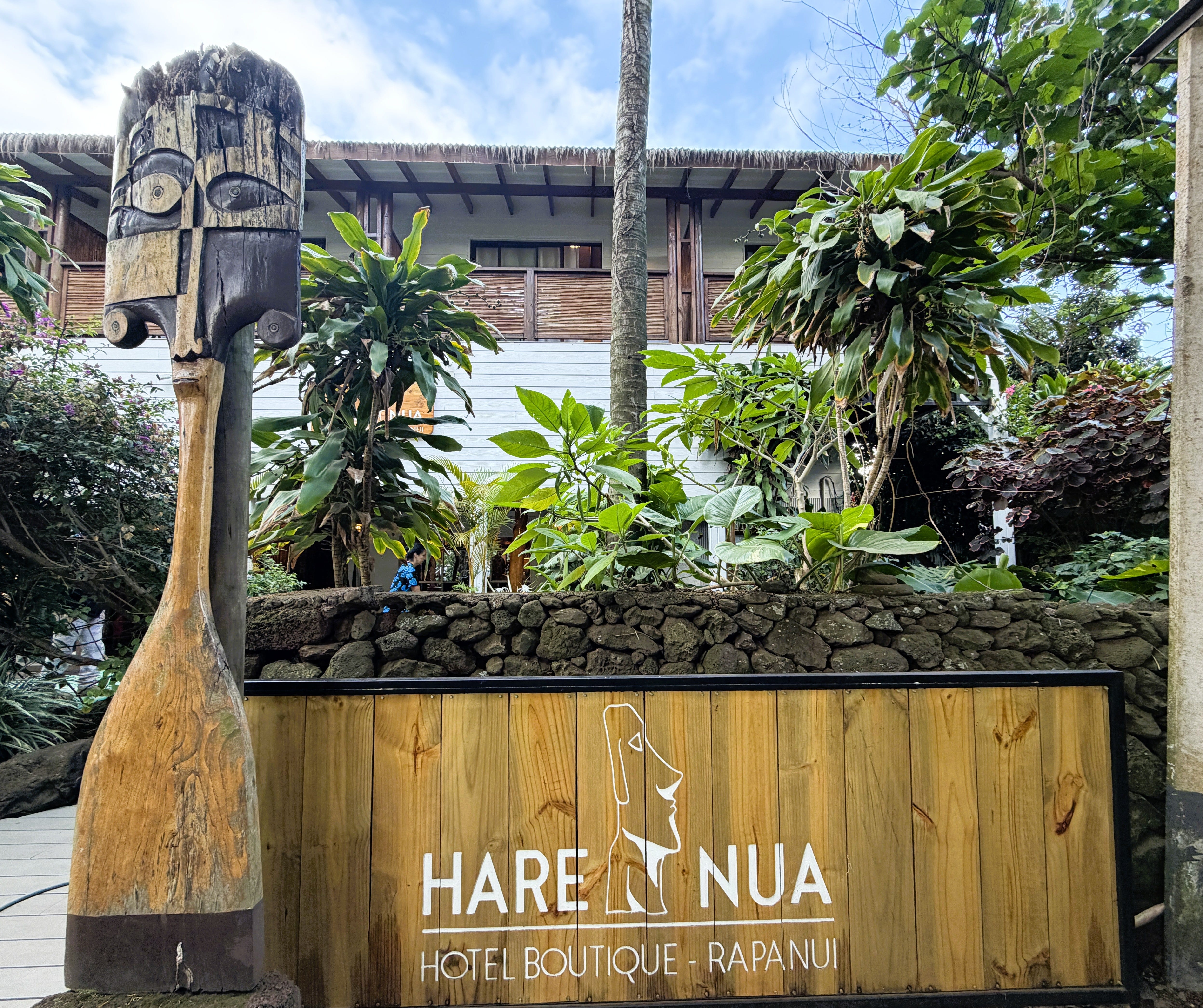
Homebase for me during my stay on the island was at the Hare Nua Hotel. This lovely boutique property is located on the main drag, convenient to restaurants, shops, and the seaside. I enjoyed the laid-back, chill ambiance and found the staff to be hospitable and welcoming. The breakfasts (included) are delicious with smoothies, yogurts, fresh fruit, home-baked breads, eggs, and more, and the rooms are spacious and comfy.
There’s a small swimming pool and hot tub onsite and plenty of public space to hang out in throughout the hotel. Just don’t mind the roosters crowing whenever they feel the need, which is often, and the occasional stray dog passing through.
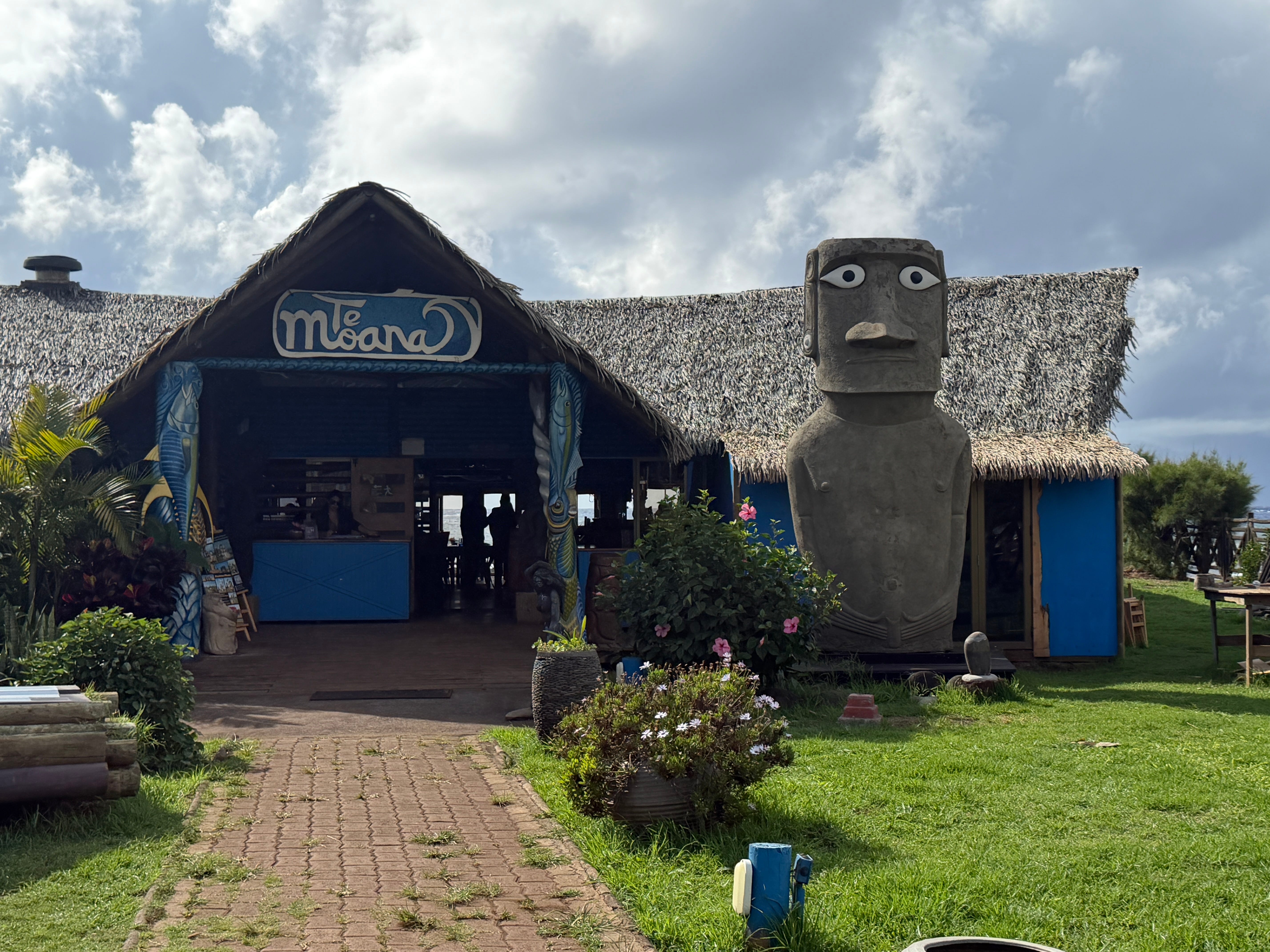
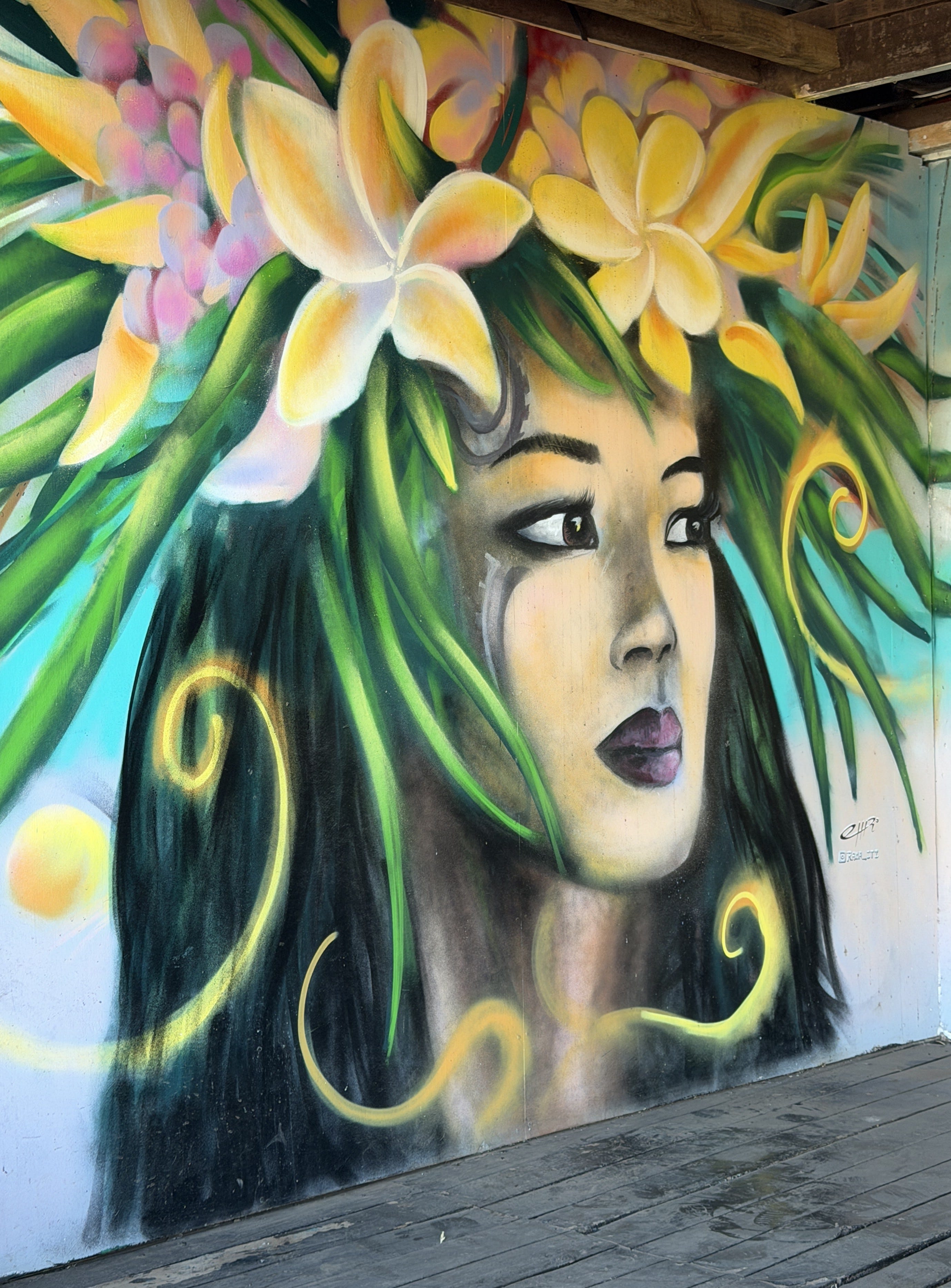
In addition to the tours I took, I also attended a cultural performance by the Kari Kari Cultural Ballet, the oldest artistic group on Rapa Nui. Founded in 1996, the goal of the troupe is to “rescue, value and transmit the dance, melodies and culture of the Rapa Nui ancestors.”
The show is energetic from start to finish, immersing you in the island culture, with dances and songs that express the history of the island. Live musicians playing ukuleles and assorted percussion instruments, along with several singers, accompany the talented dancers.
The performers, adorned in traditional outfits, are a parade of vivid colors. They exuberantly and expressively convey a series of stories through their dances. There’s plenty of frenetic hip shaking, graceful hand movements, stomping, and more. Several times during the show, the audience is invited to the stage to participate, which also makes for some highly entertaining moments.
Debbie Stone is an established travel writer and columnist, and regular contributor for Big Blend Radio and Big Blend Magazines, who crosses the globe in search of unique destinations and experiences to share with her readers and listeners. She’s an avid explorer who welcomes new opportunities to increase awareness and enthusiasm for places, culture, food, history, nature, outdoor adventure, wellness, and more. Her travels have taken her to nearly 100 countries and all seven continents.
Subscribe to Debbie’s “Global Adventures” Podcast and Enjoy Articles & Episodes on the digital “Global Adventures” Magazine!